Drain Cleaning
When a stopper clean is not enough and the branch line needs cabling.
Read more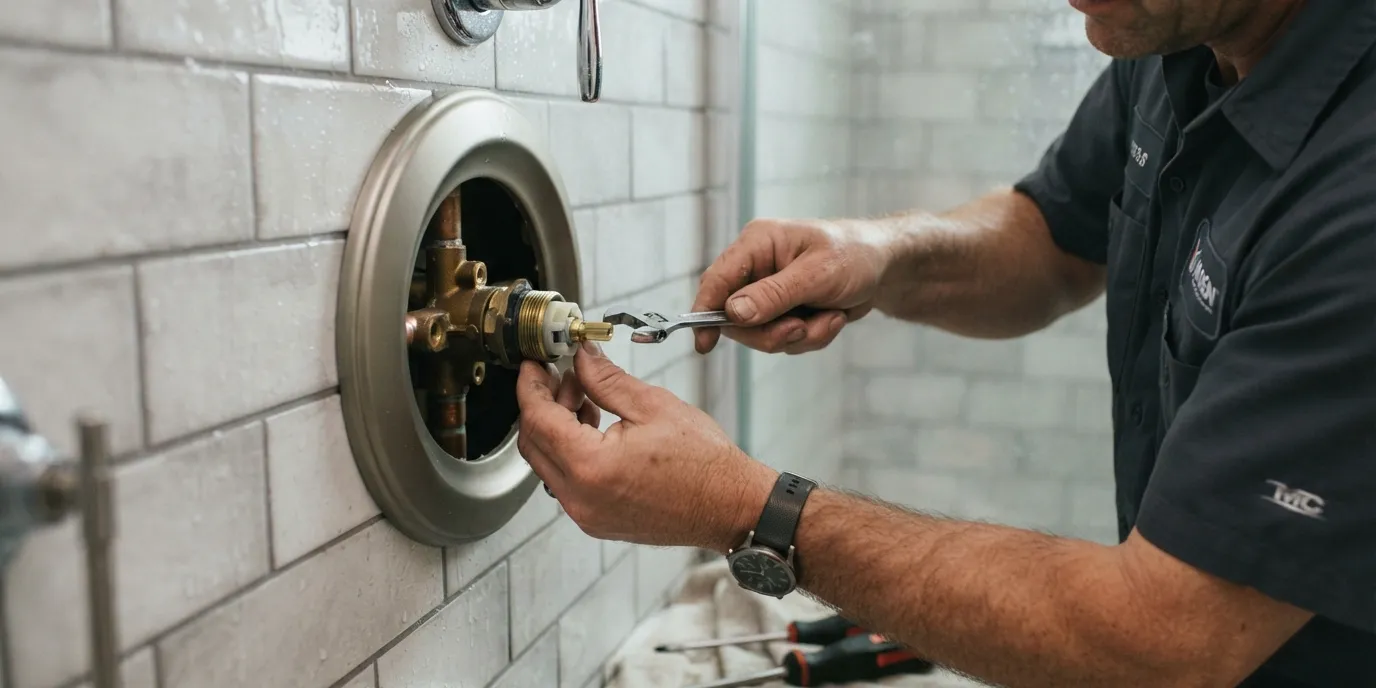
Bathrooms · Statewide
Most shower problems are solved from the front. A cartridge, a descaled head, a cleared trap. The ones that need a wall opened are worth identifying before anyone starts, and the ones that stain a ceiling below are worth acting on this week.
Tell us whether it drains slowly, drips, swings temperature, or stains the ceiling below. Each one points somewhere different.
Dollar ranges here are typical Virginia costs, given for planning only. They are not a quote. The independent plumber who takes your job sets the price and gives it to you before work begins.
Drains
A shower drain that empties slowly is almost always the same thing, and it is not in the pipe you can see.
Shower and tub drains clog with a compacted mat of hair bound together by soap scum. The residue of fatty acids and hard water minerals that coats the inside of the pipe and gives hair something to catch on. It builds at the trap and just downstream of it, and it develops over months, which is why people rarely notice until they are standing in an inch of water.
What works, in order:
Skip the chemical opener. Caustic and acidic drain products do a poor job on a hair-and-soap mat, they sit in the trap where the next person to work on the pipe will meet them, and repeated use damages older pipe and rubber seals. In a tub with a brass or plated waste assembly they will attack the finish. A $20 hand auger is more effective and does no harm.
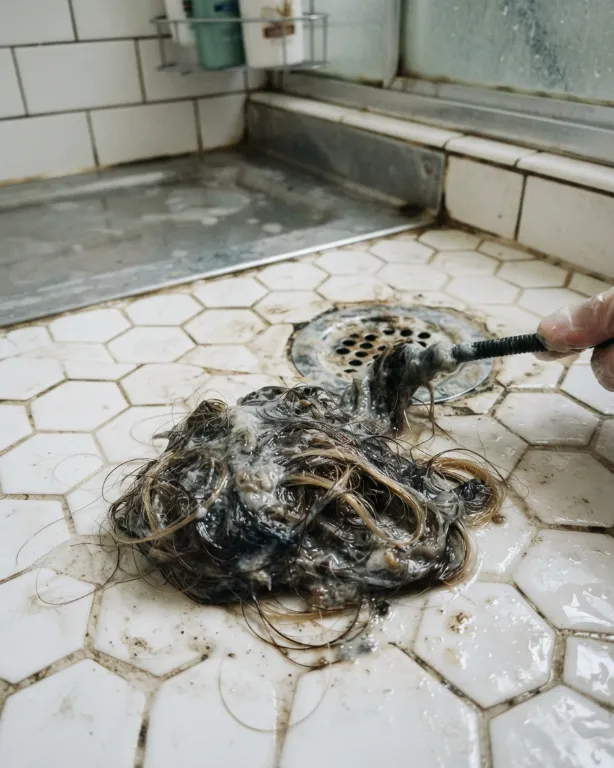
A flat silicone or stainless strainer over the drain intercepts the problem at the surface, where it is a two-second clean rather than a service call. It is the single most effective plumbing accessory in a bathroom.
If it has slowed again within weeks of the last clearance, the coating runs further than a stopper clean can reach.
Valves
Behind the trim plate there are only a few components, and each has a distinct symptom.
The single or dual handle that blends hot and cold. Old two-handle valves have no compensation, so a toilet flushing elsewhere changes your shower temperature. Pressure-balancing valves hold the hot-cold ratio; thermostatic valves hold an actual temperature. Almost all complaints here are a worn cartridge or spool, replaced through the trim plate without touching tile.
What sends water to the shower head instead of the tub spout. Water dribbling from the spout while the shower runs is a worn diverter, often in the tub spout itself rather than the valve, in which case it is a spout replacement and a very cheap fix.
Weak or uneven spray is nearly always scale in the head or a stuck flow restrictor, not a valve or a pressure fault. Soaking the head in descaler costs nothing. Check this before anyone quotes you for valve work.
The drain assembly and the overflow plate with its linkage. A tub that will not hold water needs a stopper adjustment; a tub that leaks only when filled high is usually the overflow gasket, which drips into the ceiling below.
A setting inside the valve that caps how far toward hot the handle can travel. It should be set on every valve replacement and it routinely is not. Worth asking about in a house with small children or elderly relatives.
Only replaced if cracked, eroded, being changed for another brand, or converted from two handles to one. That is wall-opening work; everything above is not.
The practical question to settle before agreeing to any shower work is cartridge or body. A cartridge is a half-hour job through the front. A body replacement means opening a wall, ideally from behind, through a closet or an adjoining room, and only through tile as a last resort. Ask which one is proposed and why, and if a wall must be opened, ask for a neat access panel so the next repair is trivial. More on valve internals in faucet and fixture installation.
Describe the symptom and we will tell you which repair it is before anyone touches tile.
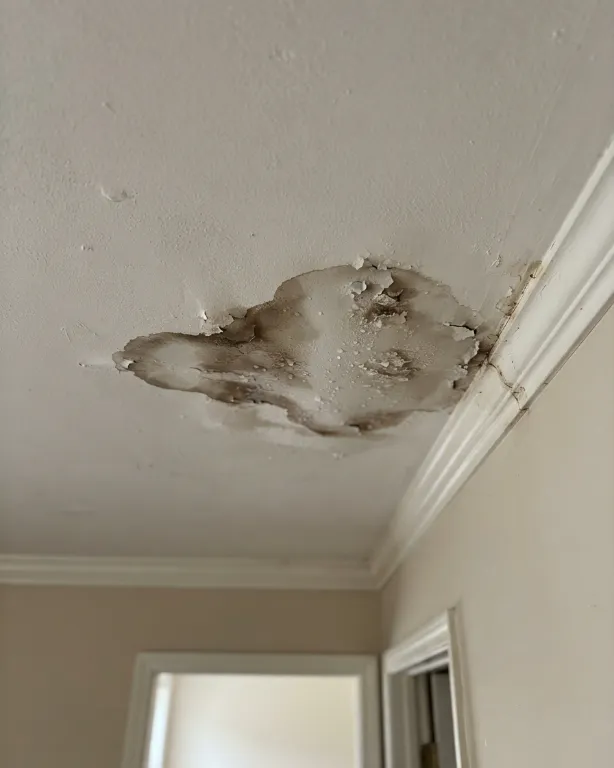
Water escaping into a floor cavity every time someone showers rots subfloor and joists and grows mould inside the assembly. A stain below a bathroom is not cosmetic and it does not stop on its own.
Leaks
A stain on the ceiling below a bathroom has five plausible sources, and the way to tell them apart is to test them one at a time.
Two failures deserve naming because they are common and expensive. Failed pan liners in older tiled showers: the waterproof membrane under the tile has torn or was never lapped correctly at the corners, so every shower puts water into the floor. No amount of regrouting fixes it. The shower floor has to be rebuilt. And overflow gaskets in tubs: a $10 part that people live with for years, filling the tub high, dripping into the ceiling below each time.
If the bathroom sits over a basement or an unfinished space, take the free look from below before anything is opened up. It is often possible to see exactly which joint is wet.
Remodels
The plumbing decisions in a bathroom remodel are made early and are expensive to revisit.
A tub-to-shower conversion is the most common request, and it is more than swapping a fixture. Three things change: the drain, the valve and the waterproofing.
| Element | Tub | Shower | Implication |
|---|---|---|---|
| Drain size | 1.5 inch | 2 inch | Branch drain usually has to be replaced |
| Drain position | At the end wall | Centred or linear | New trap location, floor opened |
| Valve height | Around 28 inches | Around 48 inches | Valve relocated, wall opened |
| Waterproofing | Tub flange does the work | Full pan and wall membrane | Substantial tiling scope |
| Venting | Existing | May need revision | Depends on new trap position |
| Flow demand | Fill once | Continuous 2+ gpm | Check hot water capacity |
Two decisions worth making deliberately. Keep at least one tub in the house if you may sell to families. Buyers with small children notice. And check hot water capacity against the new shower: a rain head plus body sprays can demand 6 gallons a minute, which a 40-gallon tank cannot sustain. That is exactly the case where a tankless unit or a larger tank earns its cost, and it is far cheaper decided now than after the tile is set.
While the wall is open, do the cheap things: a mixing valve with the anti-scald stop set, a proper access panel, shutoffs for the shower branch, blocking behind any future grab bar, and if the house still has old supply pipe in that wall, replace it. See whole-home repiping. None of these are expensive during a remodel and all of them are expensive afterwards.
Performance
Two different complaints, two different causes, and both are commonly misdiagnosed as needing a new shower head.
Weak spray. Work through it in this order and stop when it improves: descale the shower head; check the flow restrictor is not blocked (a small plastic disc inside the head); confirm the valve cartridge is not scaled; test static pressure at an outside hose bib. A reading under 40 psi points at the regulator or, in a house built before 1960, at supply pipe closed up with rust. See historic home plumbing. Replacing the head first is the standard mistake.
Runs out of hot water. That is capacity, not the shower. A 40-gallon tank supports roughly one 10-minute shower and part of another; two consecutive teenage showers will exhaust it. The options are a larger tank, a faster-recovery gas unit, or tankless. Set out on water heater installation.
Temperature swings mid-shower. A toilet flushing or a washing machine filling drops pressure on the cold side and the mix shifts hot. An old two-handle valve has no defence against this. A pressure-balancing valve fixes it; a thermostatic valve fixes it more comfortably.
Never hot enough. Check the tank set point is 120 degrees, then check the valve’s anti-scald limit stop. It is frequently set too conservatively by an installer and takes two minutes to adjust. Only after both of those is a mixing valve fault worth investigating.
Ninety per cent of weak showers improve with a head soak and a cartridge. Ask us before buying anything.
Cost
Shower and tub work spans the cheapest plumbing there is and some of the most involved.
| Work | Typical range |
|---|---|
| Clear a slow shower or tub drain | $150. $320 |
| Cable a shower branch line | $250. $500 |
| Shower head and arm replacement | $120. $280 |
| Valve cartridge replacement | $180. $400 |
| Tub spout with diverter | $150. $320 |
| Tub waste and overflow assembly | $300. $650 |
| Overflow gasket only | $150. $300 |
| Valve body replacement, rear access | $600. $1,400 |
| Valve body replacement through tile | $900. $2,500 |
| Leak diagnosis and testing visit | $150. $400 |
| Tub-to-shower conversion, plumbing only | $1,800. $4,500 |
| Shower pan rebuild, plumbing scope | $1,200. $3,000 |
Conversion and pan figures cover plumbing only. Tiling, waterproofing, glass and finishes are a separate trade and typically the larger share of a bathroom budget. Worth getting both numbers before committing to a scope.
A flat strainer over the drain turns a service call into a two-second clean. Cheapest plumbing purchase in the house.
Shower running, tub standing, tub draining, walls sprayed, everything off. Five tests, in that order, identify almost every bathroom leak without cutting a single hole.
Any time a valve body is replaced in a tiled wall. It costs almost nothing while the wall is open and saves a tile demolition next time.
Questions
A mat of hair bound together by soap scum, sitting in and just past the trap. Soap residue coats the pipe wall and gives hair something to catch on, and it builds over months. Pull the stopper out first. A large share of slow showers clear completely at that stage, for nothing. If it slows again within weeks, the coating extends further down the branch and needs proper cabling.
No. They do a poor job on a hair-and-soap mat, they sit in the trap where the next person working on the pipe will meet them, they damage older pipe and rubber seals with repeated use, and they attack plated waste fittings. A $20 hand auger from a hardware shop is more effective and harmless.
A flush draws cold water, pressure on the cold side drops, and the mix at your valve shifts hot. Old two-handle valves have no defence against it. A pressure-balancing valve holds the hot-cold ratio through pressure changes and a thermostatic valve holds an actual temperature. If you already have a single-handle valve and it still swings, the internal spool or cartridge is worn. A cartridge job through the trim plate.
Test one thing at a time. Run the shower with nothing else on for ten minutes. Then fill the tub and let it stand without draining. Then drain it. Then spray the walls without wetting the floor. Then check with everything off. Whichever test brings the stain out tells you whether it is the pan, the drain, the overflow, the tile or a pressurised supply line, and a leak that continues with everything off is the urgent one.
Usually not. Most complaints are fixed by a cartridge replacement done through the trim plate with no demolition. Only a cracked or eroded valve body, a brand change, or a two-handle-to-single conversion needs the wall opened, and that can often be done from behind through a closet or adjoining room. If tile must come out, ask for a neat access panel to be fitted so the next repair is a twenty-minute job.
Probably not. Descale the head first, then check whether the small plastic flow restrictor inside it is blocked, then have the valve cartridge checked, then test static pressure at an outside hose bib. Buying a new head first is the standard mistake, and if whole-house pressure is under 40 psi, the cause is the regulator or the supply pipe, and no head will fix it.
No, it is capacity. A 40-gallon tank covers roughly one ten-minute shower plus part of another, and recovery on an electric tank is about 20 gallons an hour. The answers are a larger tank, a faster-recovering gas unit, or tankless. Staggering showers by half an hour also works, if less popularly.
More than swapping the fixture. The drain goes from 1.5 inch to 2 inch and usually moves, so the branch drain and trap are replaced. The valve moves from around 28 inches to around 48 inches, so that wall is opened. And the waterproofing changes completely. A tub flange does the work in a tub, while a shower needs a full pan and wall membrane. Budget the tiling and waterproofing separately; it is usually the larger cost.
Almost certainly the overflow gasket. The rubber seal behind the overflow plate at the head of the tub. It is a very cheap part, and it drips into the ceiling below every time the water reaches that level. People live with it for years and pay for the ceiling instead.
Only if the leak is genuinely surface water through failed grout. If the waterproof membrane under the tile has torn or was never lapped correctly at the corners, water is bypassing the tile entirely and regrouting changes nothing. The test is whether spraying the walls produces the leak while running the shower normally does not. A failed pan liner means the shower floor has to be rebuilt.
Related work
Bathrooms touch drains, pressure and hot water all at once.
When a stopper clean is not enough and the branch line needs cabling.
Read moreCartridges, stops, supply lines and the rest of the fixture list.
Read moreFor a leak that continues with every fixture off. The pressurised kind that does not stop.
Read moreStart with the cheap tests
Shower running, tub standing, tub draining, walls sprayed, everything off. Those five tests identify almost every bathroom leak, and a stopper clean fixes most slow drains for nothing.
(866) 683-0244Statewide, 24 hours. Independent licensed professionals.