Sewer Line Repair
When the floor drain backup is a failed lateral rather than a clog.
Read more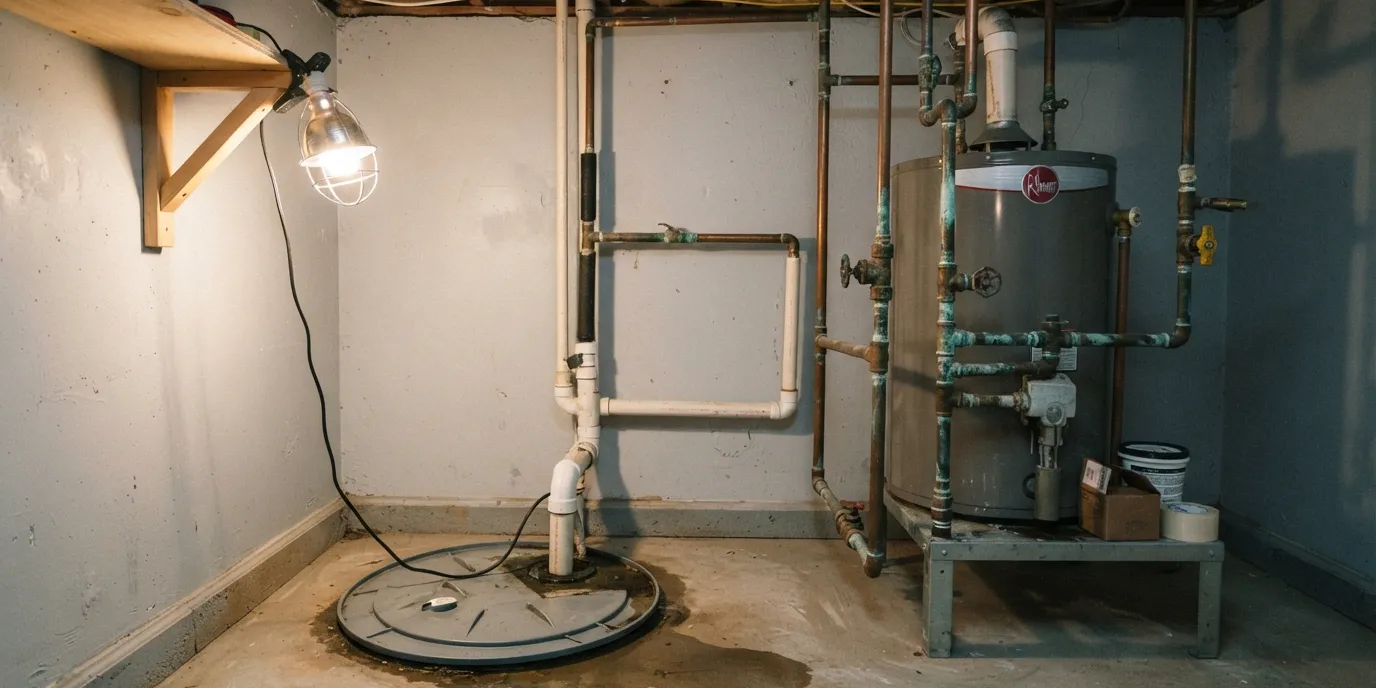
Basement plumbing · Northern Virginia, Piedmont & the Valley
Sump and ejector pumps, sewer backups at the floor drain, water heaters in finished space, and leaks that reach carpet in minutes. Basements are easy to diagnose and unforgiving when you are slow.
If water is rising and the electrical panel is at floor level, say so when you call.
The trade-off
Basements are the easiest foundation type to work in. Everything is at standing height, the pipe runs are visible, the shutoffs are reachable, and a plumber can trace a system end to end in ten minutes without lying in dirt. Diagnosis that takes an hour in a crawl space takes fifteen minutes here.
The trade-off is what a failure costs. In a crawl space, a leak drips onto earth. In a basement, it lands on a finished floor in a room with drywall, furniture, stored possessions and, very often, the electrical panel. The same quantity of water produces a completely different bill. That asymmetry shapes how basement plumbing should be approached: fast detection, sensible protective measures, and equipment that gets serviced rather than ignored until it fails.
Basements are also regionally concentrated in Virginia. They are the norm across Northern Virginia and much of the Piedmont and Shenandoah Valley, common in the older parts of Richmond, and comparatively unusual through Hampton Roads where the water table makes them impractical. If you have one, this page is for you.
Basement problems are quick to diagnose. That is the one advantage. Use it.
The worst call
A basement floor drain is the lowest opening in the entire drainage system. If the main line out of the house is blocked, everything the household sends down a pipe arrives there.
Every flush upstairs is feeding what is coming up downstairs. Stop using water first, call second.
The immediate priority is to stop adding to it. No flushing, no showers, no dishwasher, no laundry. A washing machine discharging forty gallons into a blocked line will put most of that on your basement floor. Then call, and be clear that it is sewage and that it is surfacing, because that changes the priority and the equipment.
What caused it is almost always one of four things. A blockage in the lateral, from grease, wipes or accumulated solids, which cabling or hydro jetting clears. Root intrusion into a clay or cast iron line, which is extremely common in older Virginia neighbourhoods with mature street trees. A structural failure. An offset joint, a sag holding standing waste, or a collapsed section. Or, on a municipal system during heavy rain, a surcharge in the public sewer pushing back toward the house.
Those four need different responses, which is why a camera inspection should follow the clearing rather than being skipped. Cabling a root-filled line restores flow for a season; knowing it is root-filled lets you plan a repair before the next backup. See sewer camera inspection.
Sewage surfacing indoors is a call-now situation, at any hour.
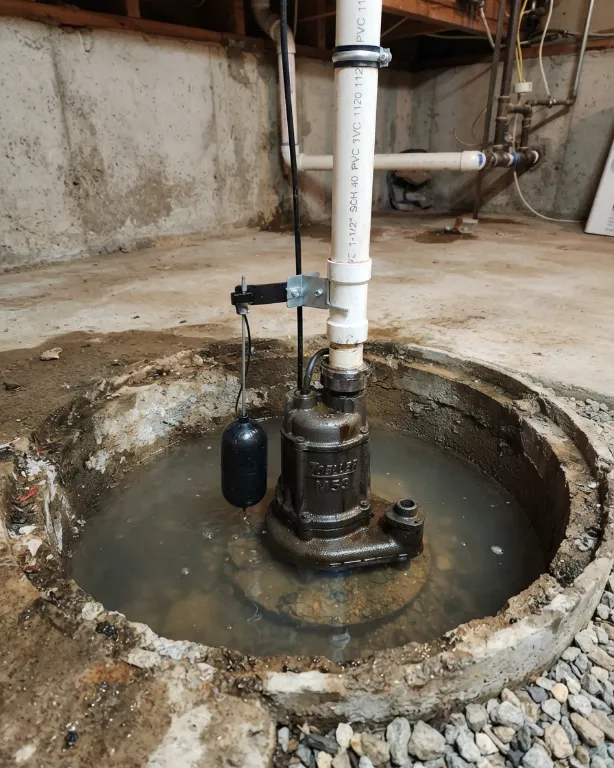
The two pumps
They sit in similar pits, look broadly alike, and do entirely different jobs. Knowing which you have matters when one stops working.
| Sump pump | Sewage ejector pump | |
|---|---|---|
| Handles | Groundwater collecting under the slab | Waste water and sewage from fixtures below the main drain |
| Pit | Open or loosely covered, collects through weep holes and drain tile | Sealed and vented, because of what is inside it |
| Discharges to | Outside, away from the foundation, never into the sewer | Up into the main sewer or septic line |
| Typical failure | Stuck float, failed check valve causing short cycling, burnt motor, frozen or blocked discharge line | Failed float or switch, seized impeller from wipes and solids, failed seal producing odour |
| When it fails | You find out during the next heavy rain, usually at the worst moment | You find out immediately. The basement fixtures stop draining |
| Worth having | A battery backup unit, if the basement is finished. Power cuts and heavy storms arrive together. | An alarm on the pit. It buys you the hours you need to call somebody. |
Sump pumps do not fail on a dry Tuesday. They fail during the storm that also takes the power out, which is precisely why battery backup is worth it in a finished basement and why the annual test is not optional.
Ten minutes of testing beats discovering the problem during a storm.
Which trade do you need?
Water on a basement floor is one of the few problems where calling the wrong trade is genuinely common. A plumber cannot fix a foundation drainage problem, and a waterproofing company cannot fix a weeping supply line. Establishing which you have takes about five minutes.
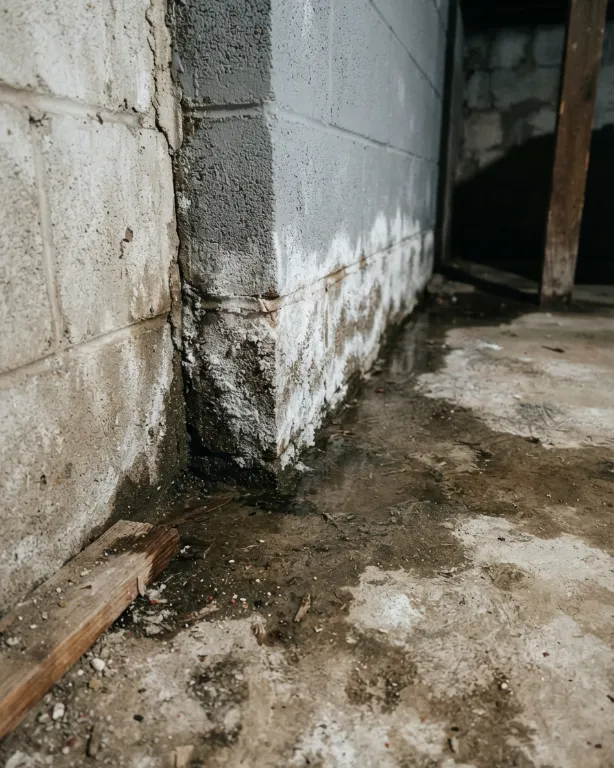
It is probably groundwater if the water appears after heavy rain and not otherwise, it tracks along the joint between the floor and the wall, it seeps through a crack in the slab or through a block wall, there is efflorescence, that white powdery deposit, on the masonry, and the sump pit fills at the same time. Groundwater intrusion is a drainage, grading and waterproofing problem.
It is probably plumbing if the water appears in dry weather, it is pooled beneath a specific pipe, fixture or appliance, the water bill has risen, you can hear running water with everything closed, or the water is warm. Any of those points at the supply or drainage system.
The awkward middle case is a failed or blocked sump discharge line, which is plumbing hardware handling a groundwater problem. And in an old Virginia basement with a floor drain connected to the sanitary sewer, a rainwater problem and a sewer problem can present in exactly the same spot. That is when a camera earns its money.
Five minutes on the phone usually establishes whether you need us at all.
Below-grade bathrooms
One question determines the entire cost and layout of a basement bathroom, and it should be answered before anyone draws a floor plan: are the fixtures above or below the level of the drain leaving the house?
If the main drain leaves the house low enough, basement fixtures connect conventionally and drain by gravity like any other bathroom. Cheapest, simplest, most reliable, and nothing to maintain. Usually requires breaking the slab to run new drain lines, which is the main cost.
Fixtures drain into a sealed, vented pit and a pump lifts the waste up to the main line. Handles a full bathroom and a laundry. Needs the slab opened for the pit, a dedicated circuit, proper venting and periodic servicing, but it makes a proper bathroom possible almost anywhere.
A macerating unit sitting behind or beside the toilet, pumping through a small-bore pipe. No slab breaking at all, which makes it attractive for retrofits and for finished basements. Limits on how many fixtures it can serve and what can be flushed, and it is a piece of machinery in your bathroom.
All three need proper venting, and venting is where amateur basement bathrooms most often go wrong. The fixtures work initially, then gurgle, drain slowly and smell. It is also permit territory in most Virginia jurisdictions, which matters when you sell. Get the drainage and venting designed before the studs go up, not after.
Ask the drainage question first. It changes everything downstream of it.
Cheap insurance
None of these are expensive. All of them are cheaper than replacing a finished lower level.
Piped to the floor drain, so a slow tank failure goes down a drain rather than into carpet. Most tanks weep for days before they fail properly, and a pan turns that into a non-event.
Beside the water heater, in the sump pit and near the laundry connection. Inexpensive, and the difference between a wet patch and a flooded room is often just knowing an hour earlier.
Rubber washing machine hoses fail without warning and discharge at full main pressure. Braided stainless replacements cost very little and remove one of the most common causes of basement flooding entirely.
Storms and power cuts arrive together, which is exactly when the pump is needed most. If the basement is finished, this is not a luxury.
Isolating valves that can actually be reached and actually turn, not seized gate valves behind a stack of boxes. Worth replacing the ones that no longer work before you need them.
For properties low relative to the street or on a system that surcharges in heavy rain, a valve that closes against reverse flow is real protection against the worst kind of basement event.
One visit covers the pan, the hoses, the alarms and the shutoffs.
Common questions
Almost certainly the main sewer line, yes. The floor drain is the lowest opening in the system, so when the line out to the street or the septic tank is blocked, that is where waste surfaces first. Stop using every fixture in the house immediately, each flush and each load of laundry is feeding it, and call. See sewer line repair.
A sump pump that cycles frequently during heavy rain is doing its job. One that runs constantly in dry weather is either handling groundwater it should not be seeing, or has a stuck float or a failed check valve letting the same water drain back into the pit and get pumped again. The last of those is common, cheap to fix, and burns pumps out early.
A sump pump moves groundwater out of a pit in the floor. An ejector pump moves sewage and waste water from basement fixtures, a toilet, a shower or a laundry sink below the level of the main drain, up to the sewer line. They look similar and they are not interchangeable. An ejector pump is a sealed system with a vent because of what it handles.
Usually a dry trap. A floor drain or a rarely used basement fixture has a water seal in its trap that keeps sewer gas out, and if nobody runs water into it for weeks that seal evaporates. Pour a bucket of water down every unused drain and the smell generally goes within an hour. If it does not, the cause is a venting problem or a failed seal on an ejector pit.
A useful first test is where it is. Water tracking along the joint between the floor and the wall, or seeping through a crack in the slab, is almost always groundwater. Water pooling under a pipe, appearing in dry weather, or coming with a rising water bill is plumbing. The two need different trades, and telling them apart before you pay anyone matters.
Usually, and it is one of the more common projects we see. The determining factor is whether the fixtures sit above or below the level of the main drain leaving the house. Above, and it connects by gravity like any other bathroom. Below, and you need an ejector pump system or an upflush arrangement, which changes the cost and the layout considerably. That question is worth answering before the room is designed.
It sits in the main drain line and closes automatically if flow reverses, so a surcharge in the municipal sewer cannot push waste back into your basement. For properties that have flooded before, or that sit low relative to the street, it is genuinely valuable insurance. It is not a substitute for keeping the line clear.
Because that is where the utilities enter and the floor drain already exists. It also means a tank failure discharges into a finished space, sometimes in the middle of the night. A drain pan piped to the floor drain, and a shutoff you can actually reach, are worth having. See water heater repair.
It varies sharply by region. Full basements are widespread across Northern Virginia and much of the Piedmont and the Shenandoah Valley, common in older Richmond neighbourhoods, and comparatively rare in Hampton Roads where the water table sits high. So a plumber who works statewide has to be equally comfortable with a Fairfax finished basement and a Virginia Beach slab.
More urgent than the same leak elsewhere, purely because of what it can ruin. Drywall, flooring, insulation, furniture, storage and often the electrical panel are all at floor level in a finished basement. Water that would be an inconvenience in a crawl space is a claim in a finished lower level.
Related work
What basement calls usually turn into.
When the floor drain backup is a failed lateral rather than a clog.
Read moreClearing the blockage that put water on your basement floor.
Read moreThe appliance most likely to fail in a finished basement.
Read moreFor the basement leaks that come from above rather than below.
Read moreWhat should follow any main-line backup, before it happens again.
Read moreWater rising in a finished space, at any hour.
Read moreWater in the lower level
Sump and ejector pumps, floor drain backups, water heater failures and finished-space leaks. Handled by local pros across Northern Virginia, the Piedmont, the Valley and beyond.
(866) 683-0244One number, 180 communities, around the clock.