Hydro Jetting
Scours grease and scale off the pipe wall instead of punching through it.
Read more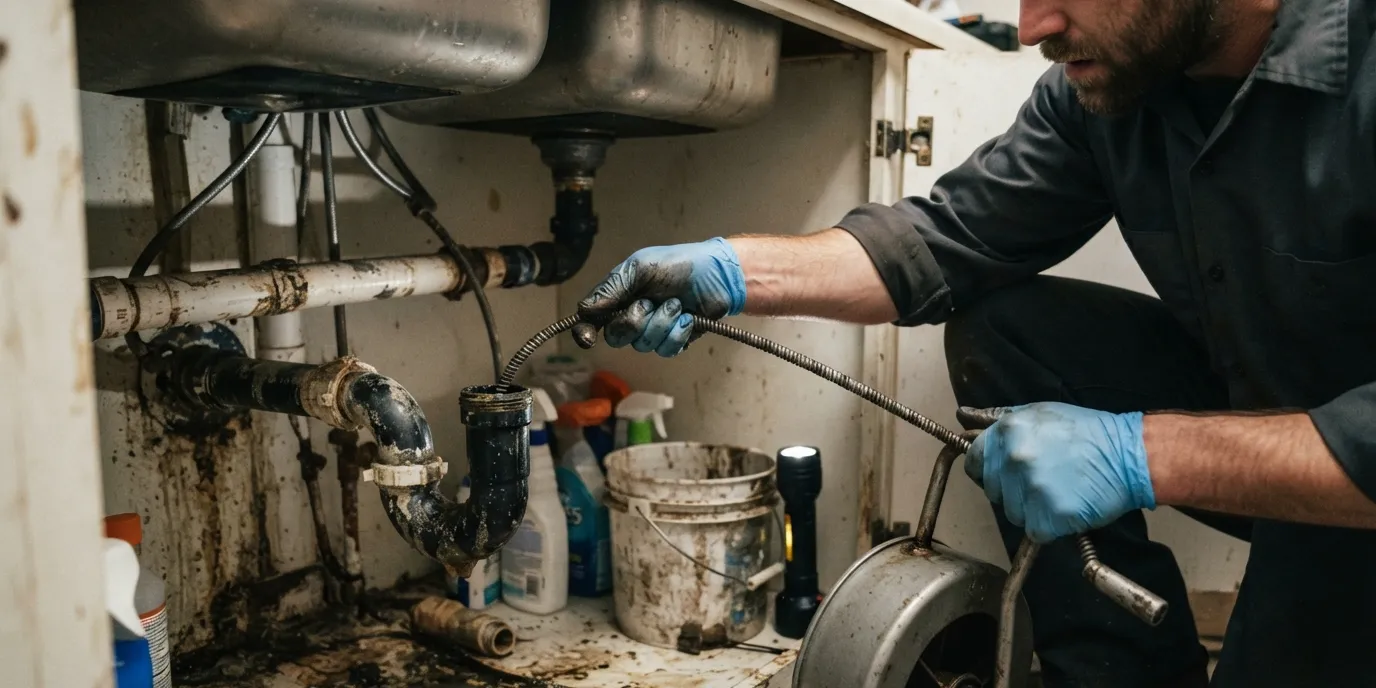
Slow, gurgling or backed up
Most blockages take under an hour. The useful part of the visit is the answer to the second question, whether that drain is going to do it again in six weeks.
Same-day slots across Virginia. Sewage backing up is an emergency, say so when you call.
Start here
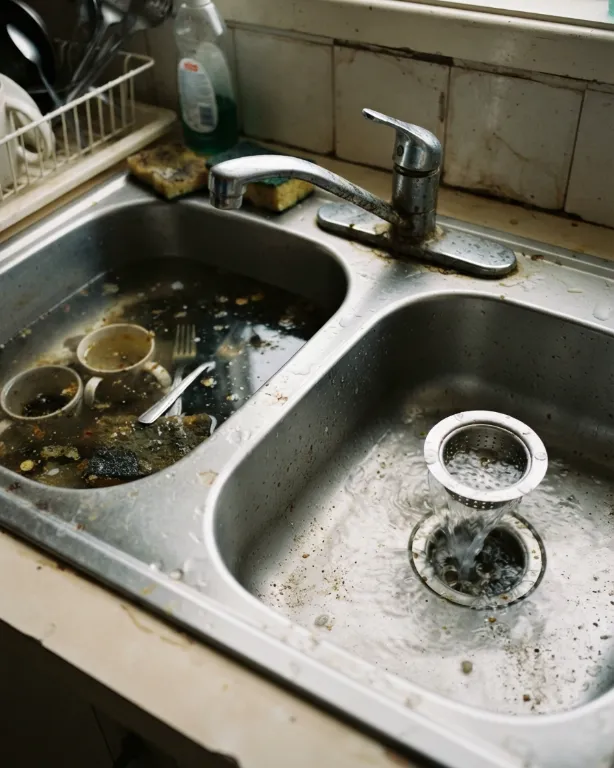
This is the only question that matters before anyone picks up a tool, and you can answer it yourself in about a minute. Run the kitchen sink. Flush a toilet. Run the bath. If one fixture is slow and everything else drains normally, the blockage is local, in that trap or in the branch line serving it, usually within a few feet of the fixture.
If several fixtures on the same level are slow, or if using one makes another gurgle or back up, the problem has moved downstream into a shared line. And if the lowest fixtures in the house, a basement floor drain, a ground-floor shower, a first-floor toilet, are the ones filling up, the main line out to the street or the septic tank is restricted. That is a different job, and it is urgent.
The distinction changes everything about the visit: where access is taken, what equipment comes off the van, how long it takes and what it costs. It also changes what happens next. A local clog is a clog. A main line clog is usually a symptom of something structural, and clearing it without looking at why simply buys you time.
Tell us which fixtures are affected and we will send someone with the right equipment on the van.
Locate it first
Where the blockage sits tells you what caused it and how long it will stay clear.
Kitchen lines fail from the inside out. Fat goes down warm, cools within a few feet, and lines the pipe wall a little more with every wash-up until the bore is the width of a pencil. Cabling punches a hole through it; only jetting takes the wall back to bare pipe.
Almost always within six inches of the drain opening, wrapped around the pop-up stopper linkage. Genuinely a five-minute job once the stopper comes out, and one of the few we will happily talk you through on the phone.
The same material, but past the trap and into the branch. A small cable clears it. If a tub and a nearby toilet are both slow, stop treating it as a tub problem.
A closet auger clears most of it. If a toilet clogs repeatedly with normal use, suspect either a low-flow model with a partly blocked rim or a slow branch line downstream, not the household.
Washing machines discharge a large volume very fast. A standpipe that overflows is often not blocked at all. It is undersized or poorly vented and simply cannot take the surge.
Everything backs up at the lowest point. This is the one that needs a camera afterwards, not just a cable. See sewer line repair.
A two-minute description usually identifies the line before anyone arrives.
No surprises
A straightforward clearance is a short, tidy job. Knowing the sequence makes it easier to tell whether the one you are getting is being done properly.
If it is a main line and the cable meets something that feels structural, an offset, a break, a stubborn recurring root mass, the right next step is a camera inspection rather than a second hour of cabling.
Most of Virginia has same-day availability, and evenings are covered.
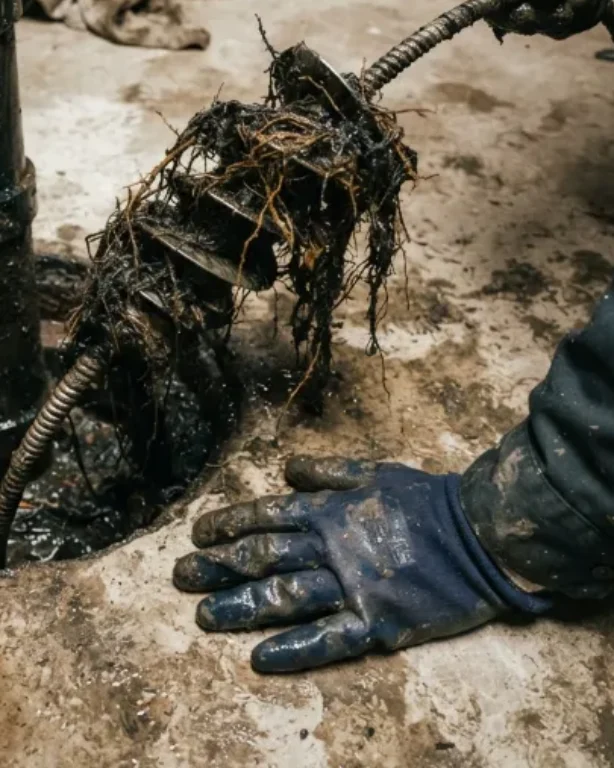
Pulling a toilet or a trap to gain access costs time and risks damage. If the house has an accessible cleanout, that is where the work should start.
The toolkit
Most recurring drain problems are the result of the wrong tool being used cheaply, over and over, on a line that needed something else.
A cable makes a hole in the blockage. A jetter removes the blockage. Those are not the same outcome.
| Method | Best for | Limits |
|---|---|---|
| Hand auger or closet auger | Toilets, and blockages within a few feet of a fixture | No reach. Will not touch anything past the branch line. |
| Sectional or drum cable | Hair, paper, soft blockages, root hair in a main | Cuts a channel through grease rather than removing it, so kitchen lines re-block. |
| Hydro jetting | Grease-lined kitchen and commercial lines, scale, heavy root mass | Needs a pipe sound enough to take the pressure. Not for fragile Orangeburg or badly cracked clay. |
| Camera inspection | Finding out why a line keeps blocking, and where | Diagnostic only. It clears nothing, and the line usually needs cabling first to see anything. |
We will tell you honestly if a cable is enough, and equally honestly if it is not.
Before you call
Plenty of slow drains clear without a plumber, and we would rather tell you that than charge for it. Some of the standard advice, though, causes more damage than the clog.
Try this. Remove and clean the pop-up stopper in a bathroom sink. Pour a kettle of very hot, not boiling, water down a sluggish kitchen drain. Plunge a single fixture with the overflow taped shut, which is the step most people miss and the reason plunging often seems not to work.
Skip this. Caustic drain cleaner. It rarely clears a real blockage, it sits in the trap as a hazard for whoever opens it next, and repeated use degrades older pipe and rubber gaskets. Plumbers ask what has been poured down there because a face full of hot caustic is a genuine hazard of the trade.
Stop at this point. If water is coming back up somewhere else in the house, if a floor drain is involved, or if there is any sewage, stop and call. Continuing to run water at that stage simply fills the house rather than the pipe.
Tell us what you have already attempted so nobody repeats it.
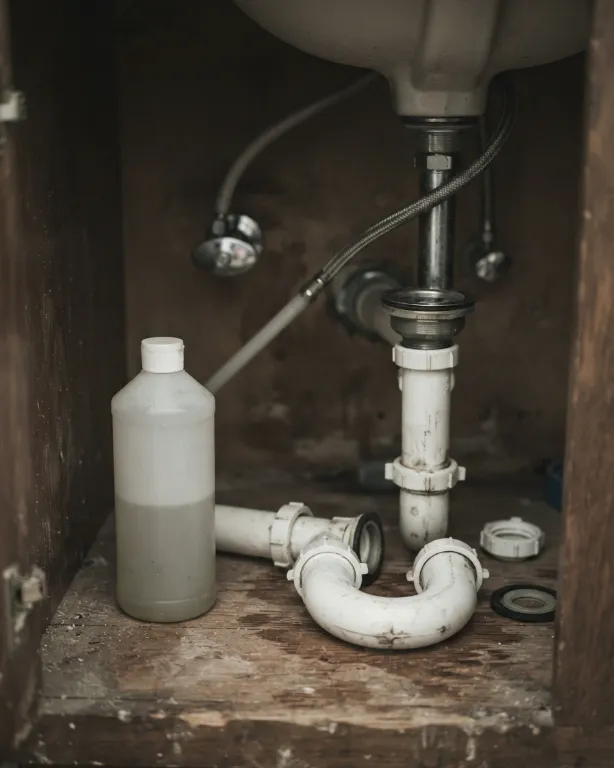
It changes how the trap is opened and what protection is worn. It is a safety question, not a judgement.
The part that saves money
A line that blocks once is unlucky. A line that blocks every few months is telling you something.
A camera inspection costs a fraction of clearing the same line four times a year.
Common questions
A single accessible fixture is at the low end of any plumber’s price list, and a main line clearance through a proper cleanout is a moderate flat rate in most of the state. Costs rise when there is no cleanout and a toilet has to be pulled, when the work is out of hours, or when the line needs jetting rather than cabling. Anyone quoting before knowing which fixtures are affected is guessing.
A bathroom sink or a toilet is usually well under an hour. A main line through a cleanout is typically one to two hours including a proper flow test. If it runs past two hours without progress, the honest conclusion is usually that the line has a defect rather than a blockage, and a camera should replace the cable.
Correctly sized and correctly used, no. An oversized head driven hard into fragile clay, Orangeburg or corroded cast iron can absolutely cause damage, which is why pipe material and age should be established before the equipment is chosen. In an older Virginia house that conversation is worth having up front.
If it is the first blockage in a fixture branch, no. If it is a main line, or the third clearance on the same line, yes, and it is usually cheaper to add it to a visit already booked than to bring someone back. Detail is on the camera inspection page.
The disposal itself rarely blocks the line, but what goes through it does. Ground food and fat combine into a paste that coats the pipe, and coffee grounds, rice, pasta and fibrous peelings are the worst offenders. If your disposal is also humming or leaking, see garbage disposal repair.
It is usually a warning. A gurgle means air is being pulled through the trap because the line is partly restricted or poorly vented. Partly restricted lines become blocked lines, generally at the least convenient moment, so it is worth dealing with before it becomes urgent.
Yes, and the approach is the same up to the tank. What matters is establishing whether the blockage is in the house line or whether the tank itself is full and backing up into it. Clearing a house line into a full tank achieves nothing. See septic system plumbing.
Yes. A single slow fixture is genuinely cheaper on a weekday and we will say so, but a main line backing up into the house is an emergency and is covered around the clock, statewide.
Keep fat out of the kitchen sink and wipe pans before washing. Use a hair catcher in the shower. Never flush wipes, even the ones labelled flushable. They are the single biggest cause of main line blockages we see. And if the house has mature trees over the sewer line, budget for a camera every few years rather than waiting for a backup.
Related work
If clearing the line is only half the answer, these are the pages worth reading next.
Scours grease and scale off the pipe wall instead of punching through it.
Read moreTwenty minutes of footage that ends the guessing about why it keeps blocking.
Read moreRoot intrusion, offset joints and collapsed clay, priced from evidence.
Read moreBlocked, slow or backing up
One call reaches an experienced local drain professional anywhere in Virginia, with the right equipment on the van the first time.
(866) 683-0244Answered 24 hours a day, seven days a week.