Drain Cleaning
When more than one fixture is slow, the toilet is the symptom and the line is the cause.
Read more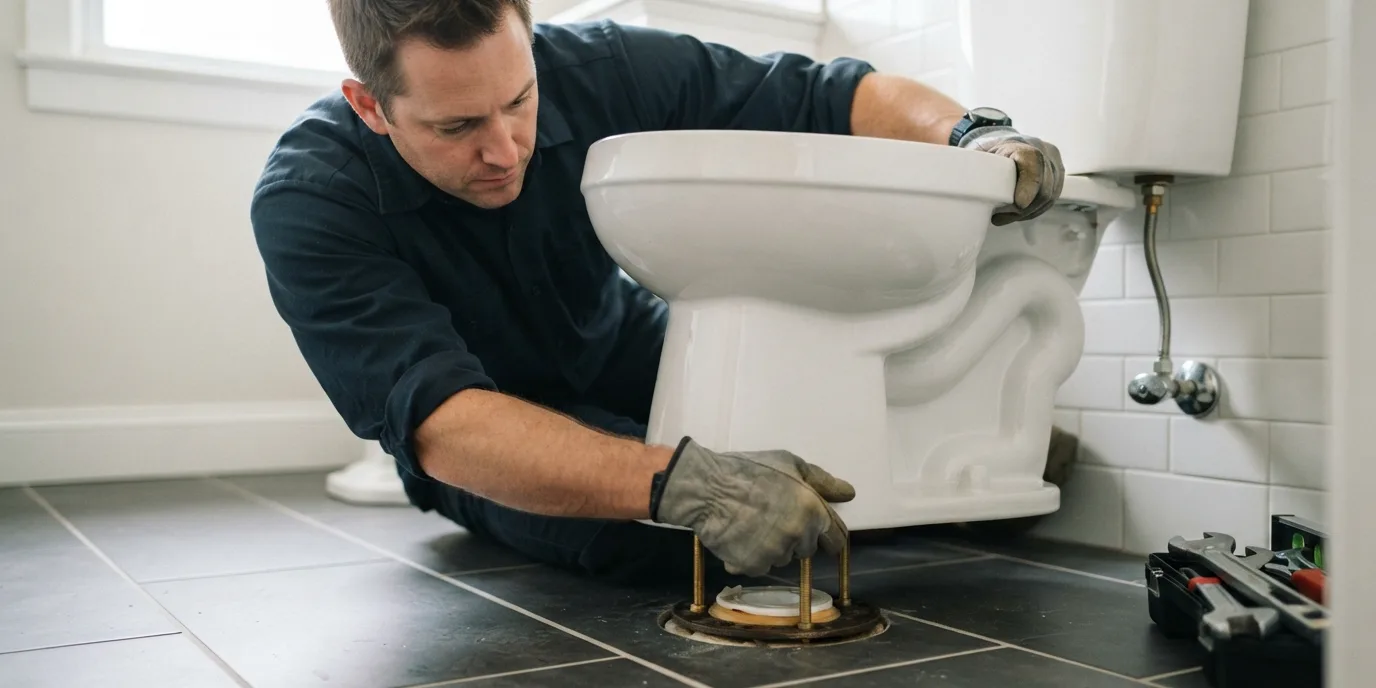
Fixtures · Statewide
A toilet that runs wastes more water than any other fault in a house, and a toilet that rocks is quietly destroying the floor underneath it. Both are inexpensive to fix and both get ignored for years.
Tell us what it is doing. Running, clogging, rocking, leaking at the base. Each one points somewhere different.
Dollar ranges here are typical Virginia costs, given for planning only. They are not a quote. The independent plumber who takes your job sets the price and gives it to you before work begins.
Diagnosis
Nearly every toilet complaint is one of seven things, and most of them are cheap.
| Symptom | Usual cause | Cost band |
|---|---|---|
| Runs continuously or cycles on its own | Flapper or fill valve | Low |
| Weak or incomplete flush | Clogged rim jets, low water level, partial blockage | Low |
| Water on the floor at the base | Failed wax ring, cracked flange, loose closet bolts | Medium |
| Rocks or shifts when you sit | Loose bolts, rotted subfloor, broken flange | Medium |
| Sewer smell in the room | Failed seal, dry trap, venting problem | Medium |
| Gurgling when other fixtures drain | Venting or a main line restriction | Varies. See drain cleaning |
| Repeated clogs in one toilet | Low-flow first-generation unit, or an obstruction in the trapway | Replacement often cheaper |
| Whole-house backup, toilet first | Main line blockage. Stop using water | Urgent. emergency |
| Crack in the bowl or tank | Nothing. This is terminal | Replace |
| Sweating tank in summer | Humidity plus cold fill water | Low. Insulated tank or a mixing valve |
The distinction that matters most is between a toilet problem and a drain problem. If one toilet is slow and everything else in the house drains fine, the fault is at the toilet. If the toilet backs up while a shower or floor drain also runs slow, or if flushing produces gurgling elsewhere, the toilet is the messenger and the line is the message.
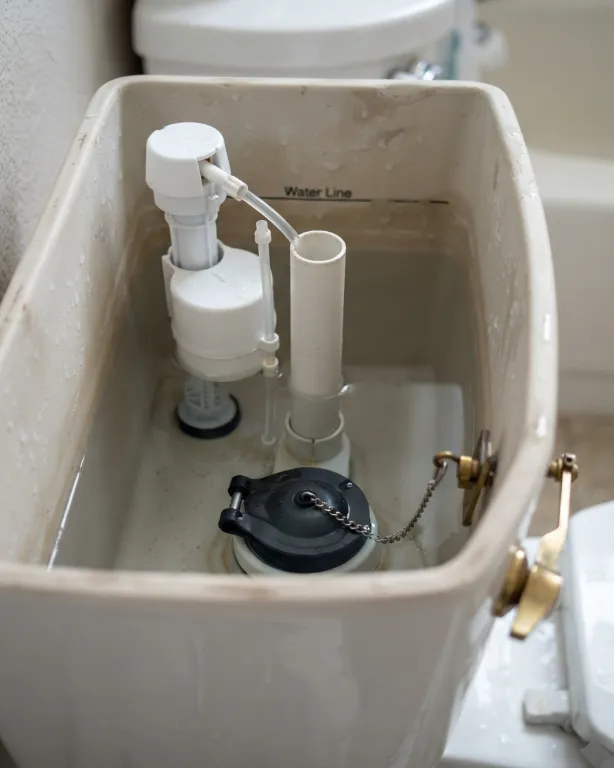
Put a few drops of food colouring in the tank and do not flush. Come back in twenty minutes. If colour has reached the bowl, the flapper is leaking, and a leaking flapper can waste well over a hundred gallons a day silently.
Tell us what it does and roughly how old it is. Most toilet calls are a same-day, low-cost fix.
Repairs
Toilet parts are inexpensive and standardised. A forty-year-old toilet can often be made to work like new for under $200.
The single most common repair. A worn flapper lets water seep past into the bowl, so the fill valve cycles on and off all night. Ten minutes, a few dollars in parts, and it usually pays for itself on the next water bill.
A fill valve that hisses, fails to shut off, or fills painfully slowly. Modern float-cup valves are quieter and more reliable than the old ball-and-arm design and are a straight swap.
Where the flapper seat itself has corroded or scaled so no flapper will seal. A larger job, the tank comes off, but still far cheaper than a new toilet.
The fix for water at the base and for a rocking toilet. The toilet is lifted, the old ring scraped off, the flange inspected, and a new ring and bolts fitted. This is also when a damaged flange gets found.
A cracked or corroded closet flange is common in older houses, especially cast iron flanges on older drainage. Repair rings work in many cases; a badly rotted flange or subfloor needs proper reconstruction.
A toy, a toothbrush or a build-up of hard water scale in the trapway. An auger designed for toilets clears most of it. Repeated blockages in the same bowl mean the trapway is compromised.
Two things not to do. First, avoid drop-in tank tablets. The ones that turn the water blue. Chlorine tablets sitting in the tank destroy rubber flappers, gaskets and valve seals, and they are the reason a great many toilets need repeated repair. Second, do not over-tighten closet bolts. Porcelain cracks and a cracked bowl is unfixable; snug and even is the aim, tightened in stages side to side.
Water on the floor deserves one more note. If the leak is at the base, find out whether it is clean supply water from a failed shutoff or fill line, or waste water past the wax ring. Clean water at the base soaking a subfloor for months is how a bathroom floor becomes a structural repair, and it often shows up first on a ceiling below. See leak detection.
Most of these are one visit, one part, and under $250 fitted.
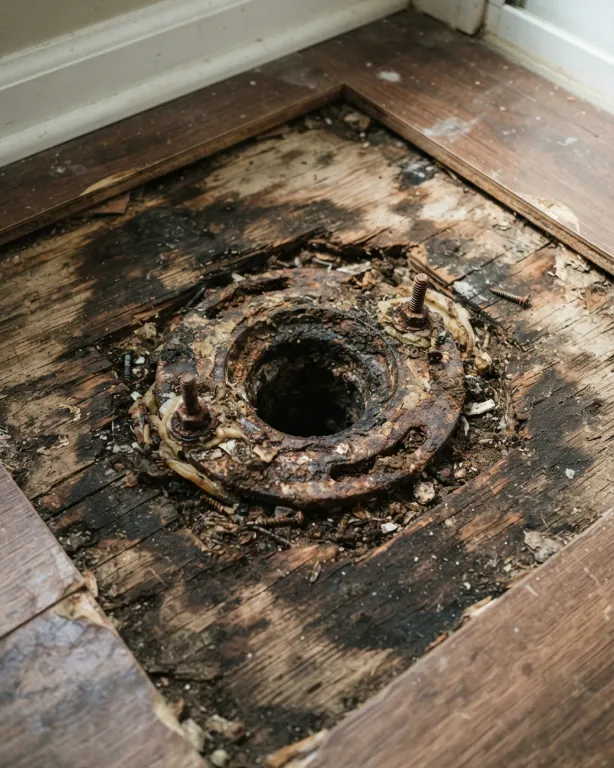
Movement breaks the wax seal, and a broken seal lets waste water into the subfloor with every flush. It rots the floor quietly and produces sewer gas indoors. Fix the movement, not just the wobble.
Replace
A toilet is one of the few fixtures where replacement is genuinely cheap relative to repeated repair.
What to look for in a replacement, in order of how much it actually matters: a fully glazed trapway of at least 2 inches, because that determines clog resistance; a 3-inch flush valve rather than 2-inch for a faster, more forceful flush; MaP figures of 800 grams or more; a rough-in matching your existing 12 inches, since 10 and 14 inch rough-ins exist and matter; and a shape and height that suit the room and the people. Brand matters less than those five numbers.
Skip, in our view: built-in bidet seats fitted at the same time unless there is already a nearby outlet, and touchless flush on a domestic toilet. Both add failure points for very little gain.
Installation
An hour of work if everything underneath is sound, and a half-day if it is not.
Ask about caulking the base. Caulk at the front and sides with the rear left open is standard practice: it stops mop water and spills getting under the bowl while still allowing a leak from the seal to escape and be seen. A fully sealed base can hide a failing wax ring for a year.
One more thing that gets skipped: replacing the shutoff. Old multi-turn stops seize, and the moment you need one is the moment a fill valve fails at 6am. A quarter-turn ball stop is a $30 part that will save you a wet floor at some point.
Clogs
Recurring clogs in one toilet and recurring clogs across the house are entirely different problems.
One toilet, repeatedly. Either the toilet itself, a scaled or narrow trapway, or a first-generation low-flush design, or a partial obstruction lodged in the trapway. A closet auger reaches most of it. If a plumber has augered it twice and it clogs again, the toilet is the problem and replacing it is cheaper than a third visit.
Multiple fixtures. The line, not the toilet. Slow drains elsewhere, gurgling when the washing machine empties, or water rising in a tub when the toilet flushes all point downstream, to a branch drain or the main sewer line. In older Virginia houses with clay laterals and mature trees, root intrusion is the usual culprit and a camera inspection settles it.
| Item | Why it clogs | Notes |
|---|---|---|
| "Flushable" wipes | They do not break down | The single biggest cause of avoidable blockages |
| Paper towel and tissues | Designed not to disintegrate | Never flush |
| Cotton buds, floss, hair | Catch on the trapway and build a mat | Floss is remarkably good at snagging |
| Sanitary products | Expand when wet | Bin them |
| Cat litter | Sets like concrete | Even the flushable kind |
| Grease and food waste | Cools and coats the line | See hydro jetting |
| Toys and small objects | Lodge in the trapway | Often needs the toilet pulled |
| Hard water scale | Narrows the trapway invisibly | Progressive; ends in replacement |
On chemical drain openers: do not use them in a toilet. They rarely clear a trapway blockage, they sit in the bowl where the next person will splash them, and they damage porcelain glaze, wax seals and older pipe. A $15 closet auger from a hardware shop is more effective and does no harm.
If more than one fixture is affected, the toilet is not the problem. A camera inspection tells you what is.
Cost
Toilet work is at the affordable end of plumbing, and it is one of the few jobs with a genuine payback.
| Work | Typical range |
|---|---|
| Flapper replacement | $95. $180 |
| Fill valve replacement | $120. $250 |
| Complete tank rebuild | $180. $350 |
| Wax ring and reset | $180. $400 |
| Closet flange repair | $250. $650 |
| Flange plus subfloor repair | $500. $1,500 |
| Auger a clogged toilet | $125. $275 |
| Pull toilet to clear an obstruction | $250. $450 |
| New toilet supplied and fitted | $450. $1,100 |
| Comfort-height or premium unit fitted | $700. $1,600 |
| Wall-hung or in-wall carrier unit | $1,800. $4,500 |
Water arithmetic is worth doing. A leaking flapper commonly wastes 100 to 300 gallons a day, which on Virginia utility rates is real money over a year. And an old 3.5-gallon toilet replaced with a 1.28-gallon unit saves roughly 10,000 to 13,000 gallons a year in a family of four. The fastest payback in the house.
It is the cheapest repair in plumbing and the most expensive thing to ignore, because the meter runs the whole time. Do the dye test tonight.
Old multi-turn stops seize shut and seize open. A quarter-turn ball valve is a few dollars and it is what lets you stop a 6am overflow yourself.
A 17 to 19 inch bowl instead of 14 to 15 is the change people thank us for most, and it costs nothing extra if you are replacing anyway.
Questions
Almost always the flapper. It is a rubber seal at the bottom of the tank that hardens and warps with age, letting water seep into the bowl until the fill valve senses a low level and tops up. Test it by putting food colouring in the tank and not flushing: if colour appears in the bowl within twenty minutes, replace the flapper. If the flapper is new and it still runs, the fill valve or the flapper seat is the culprit.
Commonly 100 to 300 gallons a day, and a badly seated flapper can waste far more. It runs silently and continuously, which is why the first sign is often a water bill that has doubled with no change in habits. This is the single cheapest repair in plumbing with the largest ongoing cost for ignoring it.
Yes. Movement flexes and breaks the wax seal between the toilet and the drain flange, and once that seal is broken every flush puts a small amount of waste water into the subfloor. It rots the floor from below and lets sewer gas into the room. Sometimes it is just loose bolts; often it is a damaged flange or a subfloor that has already begun to soften. Do not just shim it and hope.
Repair if the toilet flushes well and the porcelain is sound. Parts are cheap and standardised, and a well-made older toilet can be rebuilt for under $250. Replace if the bowl or tank is cracked, if it is a first-generation 1.6-gallon model from the early 1990s that clogs constantly, if the trapway has scaled up, or if you are on your third repair visit in two years.
Either the design or the trapway. First-generation low-flush toilets from the 1990s are notorious for it. Otherwise, look for a partial obstruction lodged in the trapway or hard water scale narrowing it invisibly from inside. If a plumber has augered it more than once and it clogs again, the toilet itself is the problem and replacing it is cheaper than continuing to clear it.
Three candidates. A failed wax ring, which puts waste water on the floor with each flush. A leaking supply connection or shutoff, which puts clean water there continuously. Or condensation on the tank in humid weather, which is harmless but looks alarming. Dry it thoroughly, then flush and watch: water appearing during the flush is the seal; water present all the time is the supply.
If the current toilet is a pre-1994 unit using 3.5 gallons or more, yes. A modern 1.28-gallon toilet saves a family of four roughly 10,000 to 13,000 gallons a year and flushes better than the unit it replaces. Do not confuse modern low-flow with the poor first-generation 1.6-gallon models; the engineering changed substantially and the good ones clear a MaP test at 800 grams or above.
A comfort-height (or right-height) bowl puts the seat at roughly 17 to 19 inches instead of the traditional 14 to 15, similar to a dining chair. It is easier to sit down onto and stand up from, which matters for tall adults, older people and anyone with knee or hip problems. It costs little or nothing extra when you are replacing anyway, and it is the change people mention to us most often afterwards.
It is one of the more approachable plumbing jobs, and many people do it successfully. The parts that go wrong are the parts you cannot see beforehand: a corroded flange, a soft subfloor, a rough-in measurement that does not match the new unit, and over-tightened bolts that crack the porcelain. If the old toilet was rocking or leaking, have someone look at the flange before you buy a replacement.
Yes, and they are the most common cause of avoidable blockages we see. They pass the toilet fine and then fail to break down, catching on joints, roots and any irregularity in the line, then collecting everything that follows. The same applies to paper towel, tissues and cotton buds. Nothing but toilet paper and human waste should go down a toilet, regardless of the packaging claim.
Related work
Toilets connect to the drainage system, so these pages often come up in the same conversation.
When more than one fixture is slow, the toilet is the symptom and the line is the cause.
Read moreThe rest of the bathroom: faucets, shutoffs, supply lines and shower valves.
Read moreFor recurring whole-house backups, this is how you find out what is actually wrong.
Read moreCheapest repair in the house
A few drops of food colouring in the tank, twenty minutes, no flush. If colour reaches the bowl, you are paying for water you never used, and it is a same-day, low-cost fix.
(866) 683-0244Statewide, 24 hours. Independent licensed professionals.