Sewer Camera Inspection
What goes in before the jetter, and again afterwards.
Read more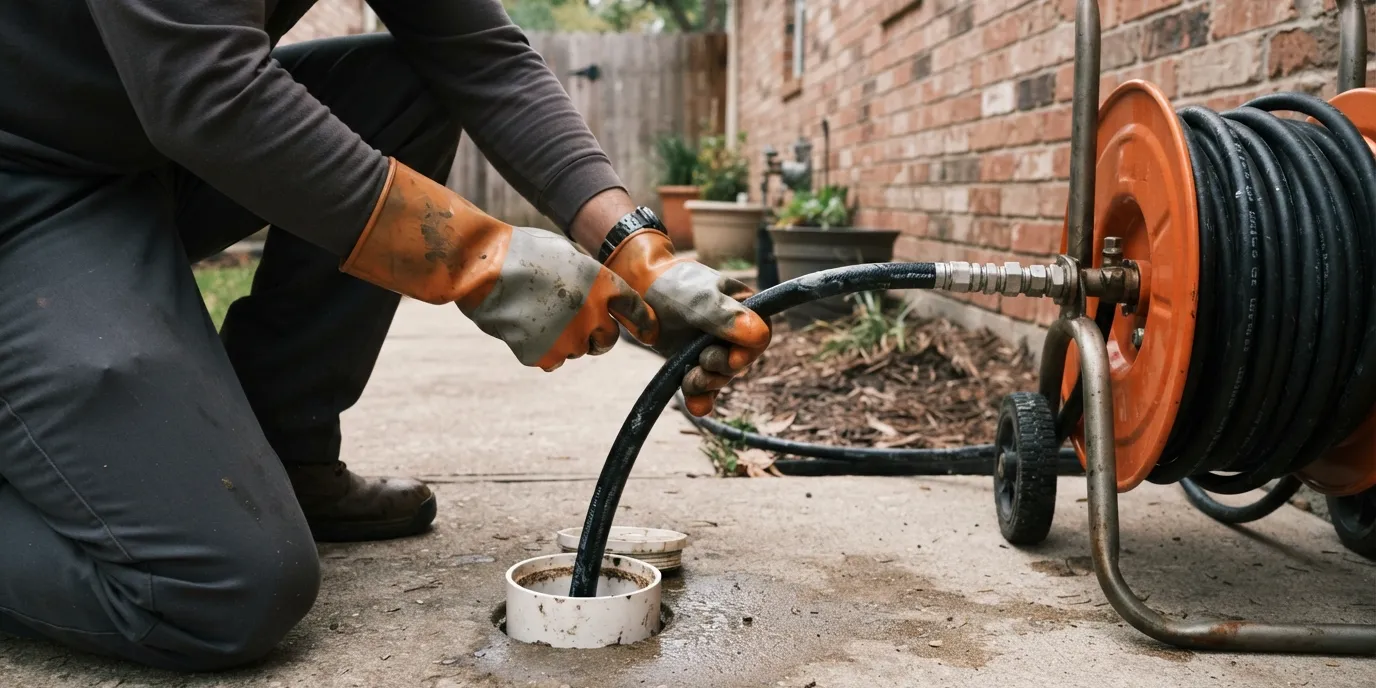
When cabling stopped working
A cable cuts a channel through a blockage. A jetter removes it from the pipe wall entirely, which is why a jetted line stays clear for years rather than weeks.
Camera first on any line we have not seen. Jetting the wrong pipe does real damage.
The difference
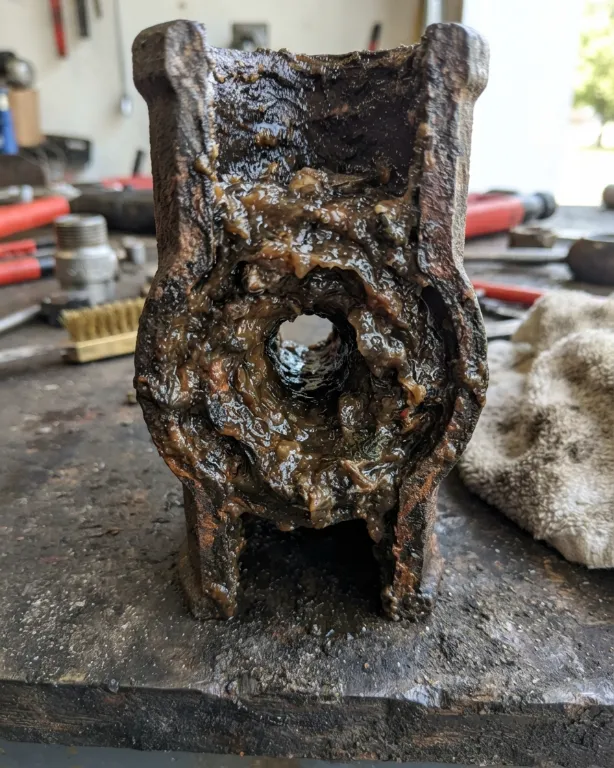
Picture a four-inch kitchen line that has been in service for twenty years. It is not four inches any more. There is half an inch of hardened grease around the whole circumference, and water is moving through a bore about the size of a golf ball. It works, just, until it does not.
A drain cable pushed through that line does exactly what it is designed to do: it makes a hole. Water flows again, the invoice is small, everyone is satisfied. But the pipe is still lined with grease, the hole closes up over the following weeks, and you make the same call in a month or two. By the third time, most people conclude the plumber is no good. Usually the plumber was simply using the wrong tool.
Hydro jetting sends water down the line at very high pressure through a nozzle that fires most of its jets backwards. Those rear jets pull the hose along the pipe and scour the wall as they pass. What comes out is not a plug with a hole in it. It is the entire lining, flushed downstream, leaving pipe that measures what it did when it was installed.
Tell us how often the line blocks. That interval usually tells us whether jetting is the answer.
Good candidates
Jetting is not a general-purpose drain service. It is the right answer to a specific set of problems.
The classic case. Cleared easily, re-blocks within weeks, and the cable always comes back greasy. Jetting resets the line properly instead of postponing it.
Older Virginia houses with cast iron drains develop a rough, rusted interior that catches everything passing through. The right nozzle takes the scale off and restores the bore.
Cabling shears roots off at the pipe wall. A root-cutting nozzle strips them back into the joint and flushes the debris away rather than leaving it to re-catch.
If you can guess the month it will block, the line has a condition rather than a clog. Jetting plus a camera establishes which.
Commercial kitchen lines are on another scale entirely and are usually best on a scheduled interval. See commercial plumbing.
A pipe about to be relined has to be genuinely clean first. Jetting is a standard preparation step for trenchless repair.
Describe the pattern and we will tell you whether cabling would do just as well.
Step by step
Done properly, jetting is a methodical job with a camera at both ends of it. Done carelessly, it is a great deal of pressure aimed at a pipe nobody has looked at.
That last step matters more than people expect. Heavy build-up conceals cracks, offsets and root entry points. It is common for a jetting job to end with a clean pipe and a newly visible defect that needs planning for, and far better to know about it now.
One visit, both jobs, and footage you keep.
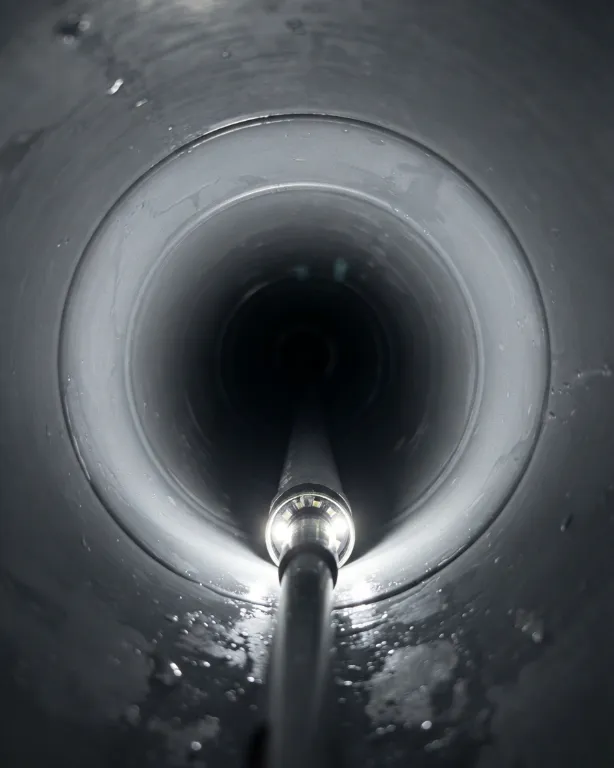
Before and after video should be handed over as a file, not just shown on a screen in your hallway. It is your evidence if the line later needs work.
Straight comparison
Cabling is faster and cheaper and it is the right answer most of the time. Here is where it stops being the right answer.
Four cable visits a year costs more than one jetting visit, and you still have a lined pipe at the end of it.
| Cabling | Hydro jetting | |
|---|---|---|
| What it does | Bores a channel through the blockage | Strips the pipe wall back to bare material |
| Best on | Hair, paper, objects, one-off clogs | Grease, scale, root mass, recurring blockages |
| How long it lasts | Weeks to months on a lined pipe | Often years, if the underlying pipe is sound |
| Cost | Lower per visit | Higher per visit, lower per year on a problem line |
| Risk to fragile pipe | Moderate, if oversized heads are used | Real. Must not be used on failing Orangeburg or cracked clay |
| Diagnostic value | Whatever comes back on the head | Full camera footage before and after |
If a cable will do, we will say so. Jetting a line that does not need it wastes your money.
Where we stop
High-pressure water is genuinely powerful, and a pipe that is already failing does not survive it. Refusing to jet is sometimes the most useful thing a plumber does on a visit.
Orangeburg. Bituminised fibre pipe, laid across a lot of Virginia between the 1940s and the early 1970s. It deforms and delaminates with age, and jetting can finish it off outright. If the camera shows Orangeburg, the conversation moves to replacement.
Badly cracked or collapsed clay. A hairline crack becomes an open joint under pressure. Where the camera shows a structural failure, the correct next step is repair, not cleaning.
Severely corroded cast iron. Scale can be the only thing holding a thin section together. Jetting removes the scale and reveals a hole. Occasionally that is exactly what needs to happen, but it should be a decision made with you in advance rather than a surprise.
Any line with no cleanout and no camera. Working blind at that pressure is not a professional risk worth taking, and we will not take it.
Tell us the year the house was built. That usually narrows it to one or two materials.
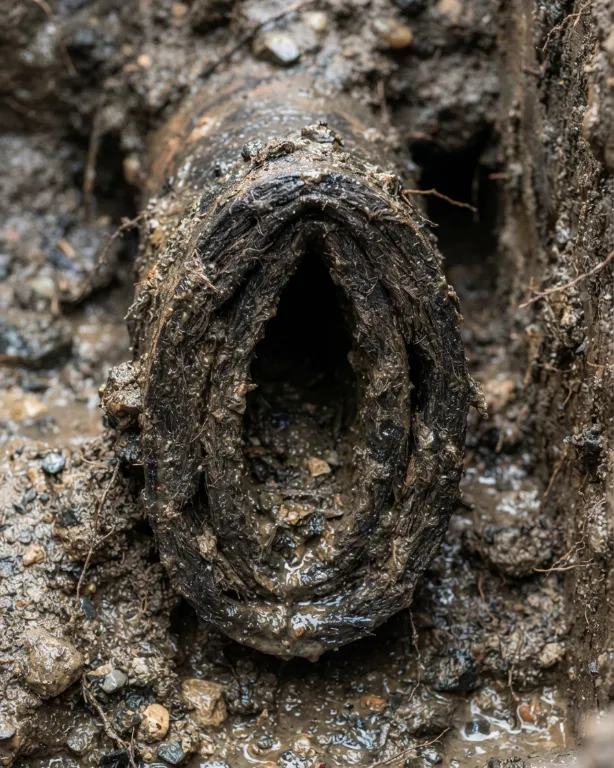
If a plumber cameras your line and declines to jet it, treat that as a finding worth acting on rather than a service you were denied.
Commercial kitchens
Restaurant and institutional lines carry a volume of fat and food waste no domestic line ever sees.
Quarterly or half-yearly, out of hours, with footage kept on file.
Common questions
It sits meaningfully above a standard cable clearance and well below any form of pipe repair. The variables are line length, access, whether a camera inspection is included, and whether the property is domestic or commercial. On a line that blocks three or four times a year it usually pays for itself inside twelve months.
Not a sound pipe. PVC, ABS, healthy cast iron and good clay all handle it without difficulty. Failing Orangeburg, cracked clay and heavily corroded cast iron can be damaged, which is exactly why the camera comes first. Any plumber willing to jet a line they have not looked at is taking a risk with your property.
A domestic kitchen line is usually one to two hours. A full sewer lateral with camera work at both ends is typically two to four. Commercial kitchen lines depend on length and on how long it has been since the last clean.
On a sound pipe with normal domestic use, several years. On a kitchen line where fat still goes down the sink daily, less. Where roots are entering at a joint, they will return. Jetting buys time, but the joint is the actual problem. See root intrusion removal.
Before, yes, on any line we have not previously seen. Afterwards we recommend it strongly. The footage confirms the work and reveals defects the build-up was hiding. Both are covered on the camera inspection page.
For grease, scale and recurring blockages, considerably. For a one-off hair clog in a bathroom sink it is overkill and a cable is the sensible tool. The useful question is not which is better but which suits the specific line, and that depends on what is in it.
Yes, with a root-cutting or rotating nozzle, and more thoroughly than a cable because the debris is flushed away rather than left to re-catch. It does not stop them returning. Only sealing the joint, by lining or replacement. Does that.
Very little when the work is done through an exterior or basement cleanout, which is the normal arrangement, because everything removed goes downstream into the sewer. Where a cleanout has to be created or an interior access used, the area is sheeted and protected first.
The house line and the run out to the tank, yes. It is worth confirming the tank has been pumped recently, because flushing a substantial volume of grease and debris into a tank already near capacity is not helpful. See septic system plumbing.
Yes, and for restaurants it is the norm. Work is scheduled after close so the kitchen is available and service is never interrupted.
Related work
Jetting rarely stands alone. It usually sits between a diagnosis and a decision.
What goes in before the jetter, and again afterwards.
Read moreCabling and augering for blockages that do not need this much pressure.
Read moreCutting them back, and the options for keeping them out for good.
Read moreCleared it three times already?
Jetting takes the line back to bare pipe and gives you the footage that shows it. One call reaches an experienced local professional with a jetter on the van.
(866) 683-0244Camera included before and after, statewide.