Polybutylene Repipe
Grey PB pipe from 1978. 1996 fails from the inside out. How to identify it.
Read more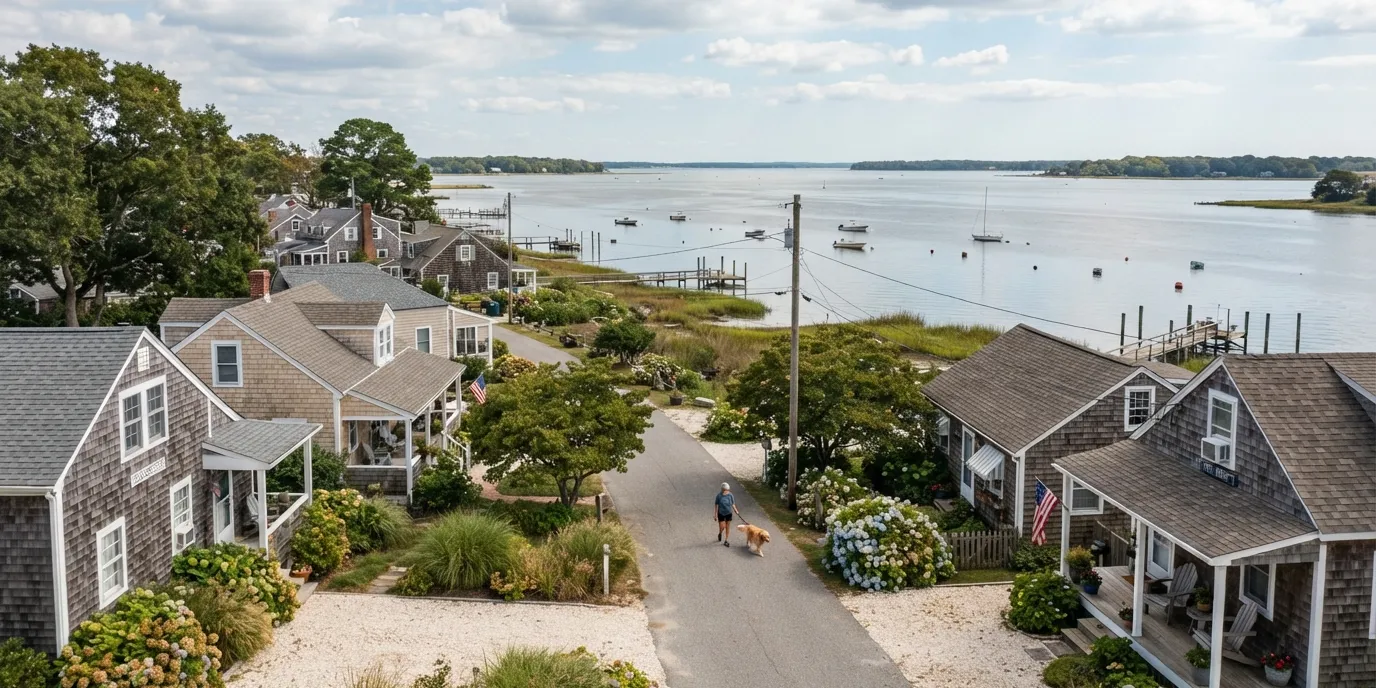
Hampton Roads · Independent city
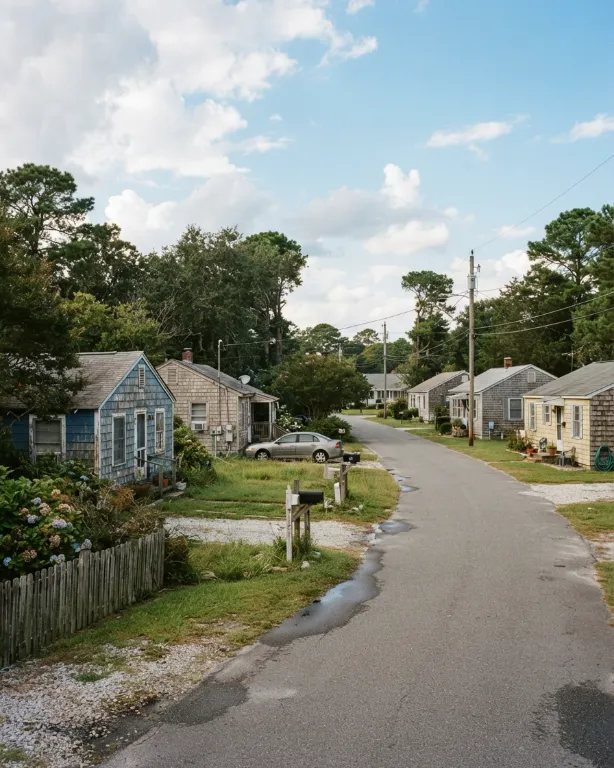
Chesapeake spans a very wide range, dense older neighbourhoods in South Norfolk, sprawling 1980s and 1990s subdivisions in Great Bridge and Western Branch, and genuinely rural land in the south of the city.
Describe the symptom and roughly when the house was built. That pair narrows most Chesapeake calls before anyone drives out.
Local pattern
The building pattern here decides which failures are likely, and that changes the first question.
The failures that turn up most in Chesapeake are a pressure tank losing its air charge and driving the pump into short cycling, a drain field asked to take more water than the soil will accept, or a supply line weeping under the concrete, showing as a warm patch rather than a puddle. None of that is a prediction about your house specifically. It is what the local building pattern makes probable, which is why the age of the house is the first thing we ask.
One city, three plumbing profiles: older urban, suburban polybutylene-era, and rural well-and-septic.
Housing eras, water supply, soil and freeze exposure across the wider region are set out in full on our Hampton Roads page. This page covers what is specific to Chesapeake.
Well depth, pump setting, tank size and the date of the last service, on one sheet of paper near the tank. Very few Chesapeake properties have it, and having it turns a diagnostic visit into a repair visit.
Give us the address and the symptom and we will take it from there.
Common problems
The local shortlist, matched to where it leads.
| You notice | Usually means | Start here |
|---|---|---|
| Low pressure, or pressure that surges | A pressure tank that has lost its air charge | Well pump & water systems |
| No water at all | Pump, switch, or a frozen line depending on the season | Well pump & water systems |
| A warm patch on the floor, or running water with everything off | A supply line leaking beneath the slab | Slab leak repair |
| A stain spreading on a ceiling | A supply fitting failing inside the floor structure | Leak detection |
| Blockages that come back on a schedule | Roots in the joints of a clay lateral | Root intrusion removal |
| Slow drains everywhere, or wet ground over the field | A tank due for pumping, or a field at its limit | Septic system plumbing |
Say what you are seeing and we will tell you the likely cause locally.
In practice
Two local issues worth understanding before you need someone out.
The commonest mistake on a well that struggles is fitting a bigger pump. A larger pump does not create water; it draws the well down faster, and a well pumped below its recovery rate delivers air and burns out motors. What matters is three numbers: the static level when nothing is running, the drawdown under sustained pumping, and how fast the well recovers afterwards. Those are measured for free while a pump is out of the hole, and they are worth writing down.
Where demand genuinely exceeds recovery, the answer is storage rather than horsepower. A holding tank with a flow control, so the well refills at its own pace while the house draws from stored water. It is a larger install and a permanent fix, where a bigger pump is a temporary one that ends in a replacement.
Clay sewer laterals were laid in short sections with joints every few feet, and those joints open slightly as the ground moves. Roots are drawn to the moisture and nutrients, find the gap, and grow into the pipe, where they form a mat that catches everything passing. Cabling cuts the mat out and buys time; it does not remove the roots outside the pipe or close the joint, which is why the blockage returns on a fairly predictable cycle.
A camera inspection is what turns that cycle into a decision. It shows whether you have a root problem at sound joints, a bellied section holding water, or a pipe that has begun to collapse, and those three have completely different answers, ranging from periodic maintenance to lining the run to replacing it.
Services
Every service is available here. These are the ones this area actually needs.
Grey PB pipe from 1978. 1996 fails from the inside out. How to identify it.
Read moreTanks, drain fields, pumping intervals and what never to flush.
Read moreSupply leaks under concrete. How they present and how they are fixed.
Read moreDiagnosis, process and Virginia price ranges on every page.
Nearby
The communities immediately around Chesapeake, then the rest of Hampton Roads.
Regional conditions, common problems and the full community list.
Questions
Yes. Chesapeake is covered 24 hours a day, along with Portsmouth, Norfolk, Virginia Beach, Hampton, Newport News and the rest of Hampton Roads. If your address sits just outside Chesapeake itself, ring anyway; coverage is wider than any list of place names.
1980s and 1990s subdivision growth squarely inside the polybutylene window. Rural southern Chesapeake on private wells and septic systems.
There is no utility answer for Chesapeake. Almost everything here is on a private well, and hardness varies property to property. Bedrock wells here commonly return hard water and often iron. A panel from a certified lab is what tells you, and local health departments periodically run low-cost clinics.
Enough to matter once or twice a winter. Around Chesapeake the risk concentrates in the obvious places, outdoor taps, garages, and any run against an exterior wall, and disconnecting the hoses in November removes most of it for nothing.
Almost entirely septic here. Worth knowing that the local health department holds the permit file for every system, tank size, field layout and the designated reserve area, and that file is free to request, which is a great deal easier than probing the lawn for a lid when something goes wrong.
Three things, all free. Whether the pump breaker has tripped, what the pressure gauge reads, and whether the pump is short cycling. If it is cycling every few seconds, switch it off at the breaker. That single action protects an expensive component from a cheap fault.
In most cases yes. Emergencies, a burst pipe, sewage backing up, no water at all, are prioritised over scheduled work, and someone is reachable at any hour. For planned work such as a repipe or a water heater replacement, we will normally offer a slot within a few days.
Independent licensed professionals working locally. Nova Plumbing Connect is a referral service. We connect you with a contractor and they are responsible for the work they carry out. We do not perform plumbing work ourselves.
Serving Chesapeake
Covered 24 hours a day across Chesapeake, Portsmouth, Norfolk, Virginia Beach, Hampton and the rest of Hampton Roads. Emergencies are prioritised; planned work is usually scheduled within a few days.
(866) 683-0244Independent licensed professionals nearby.