Pipe Insulation & Freeze Protection
The exposed runs feeding outdoor taps are where many splits actually happen.
Read more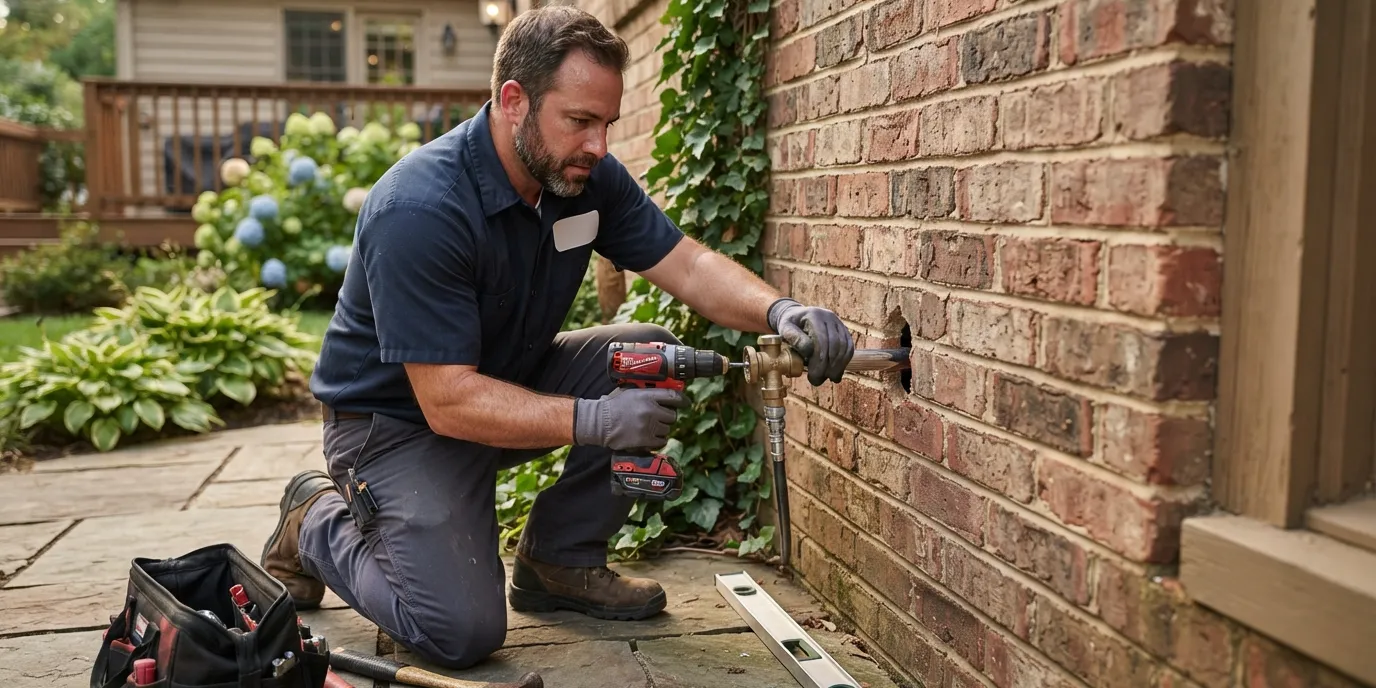
Outdoor · Statewide
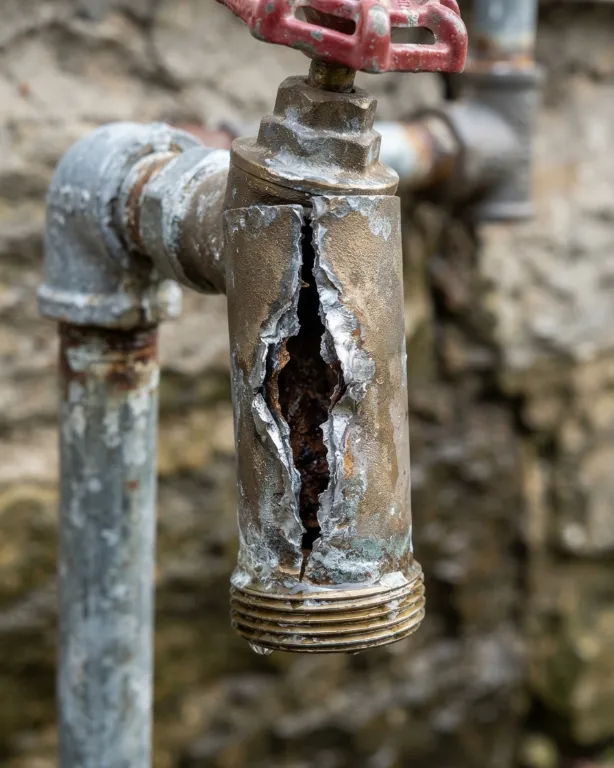
Almost every burst outdoor tap in Virginia comes from a hose left attached through a freeze, and almost none of them are noticed in winter. The crack is discovered in March, when someone opens the tap and the water goes into the wall instead of out of the spout.
If a tap has not been used since autumn, tell us. We will check inside the wall before it is opened under pressure.
Dollar ranges here are typical Virginia costs, given for planning only. They are not a quote. The independent plumber who takes your job sets the price and gives it to you before work begins.
Why they fail
Almost every burst outdoor tap in Virginia traces back to a garden hose left connected through a freeze.
An ordinary hose bib holds water in its body when it is closed. Leave a hose attached and that water cannot drain, and neither can the water in the hose itself, which sits against the valve and freezes first. Ice expands, the brass or cast body cracks, and nothing appears to be wrong at all. The tap is closed, so nothing leaks.
Then in March someone opens it to wash the car, and water pours out of the crack. Inside the wall, into the crawl space, or down the basement wall. That is why a startling number of spring leak calls are actually January damage waiting for a handle to be turned.
The second failure mode is a frost-free sillcock that cannot drain. A frost-free tap solves the problem properly by placing the valve seat eight to twelve inches inside the heated wall, so the water it shuts off is inboard of the freeze line. But it only works if the barrel is pitched slightly downward to the outside so the water in front of the seat drains out by gravity every time you close it, and if no hose is attached to hold that water in. A frost-free sillcock installed dead level, or pitched slightly inward, freezes exactly like an ordinary one.
The third is simple age. Packing nuts loosen and weep around the handle stem, washers harden, and vacuum breakers seize or drip. Those are inexpensive repairs, and they are worth doing before winter rather than after.
Disconnect every hose. Drain and store them. Close any interior shutoff serving an outdoor tap and open the tap to drain the line. Remove decorative covers so you can see the tap. That is the whole task.
If an outdoor tap has not been used since autumn, open it with someone watching the wall or crawl space inside. A frost-split body will discharge into the structure, not out of the spout.
Best done in autumn. A frost-free sillcock, correctly pitched, ends the problem permanently.
Types
Four things get called an outside tap, and only two of them belong on a Virginia house.
| Type | How it works | Verdict in Virginia |
|---|---|---|
| Standard hose bib | Valve seat at the wall face; body holds water | Freezes. Replace when convenient |
| Frost-free sillcock | Valve seat 8. 12 in inside the heated wall; barrel drains by gravity | The correct choice |
| Frost-free with integral vacuum breaker | As above, plus backflow protection | Current standard, usually required |
| Yard hydrant | Valve below the frost line, drains into gravel | For barns and paddocks, not house walls |
| Ball valve on a stub | No drain provision at all | Freezes readily; common on additions |
| Interior shutoff plus standard bib | Manual seasonal isolation | Workable if someone remembers every autumn |
Two details matter as much as the type. Pitch: a frost-free unit must slope down toward the outside along its whole length, so ask for that to be confirmed with a level at install. Length: the barrel has to be long enough that the seat sits inside the heated envelope. An eight-inch unit through a thick masonry wall or over an unheated crawl space can still place the seat in cold air, which defeats the design entirely.
The vacuum breaker is a small device at the spout that prevents contaminated water, a hose lying in a puddle, a hose feeding a chemical sprayer, being drawn back into the potable supply if pressure drops. It is required on new work in Virginia, and the little screw-on brass versions available at any hardware shop are a legitimate retrofit for an existing tap. They do sometimes drip as they age, which is a cheap replacement rather than a reason to remove it.
Send a description of the handle and body. It usually identifies the tap and the right replacement.
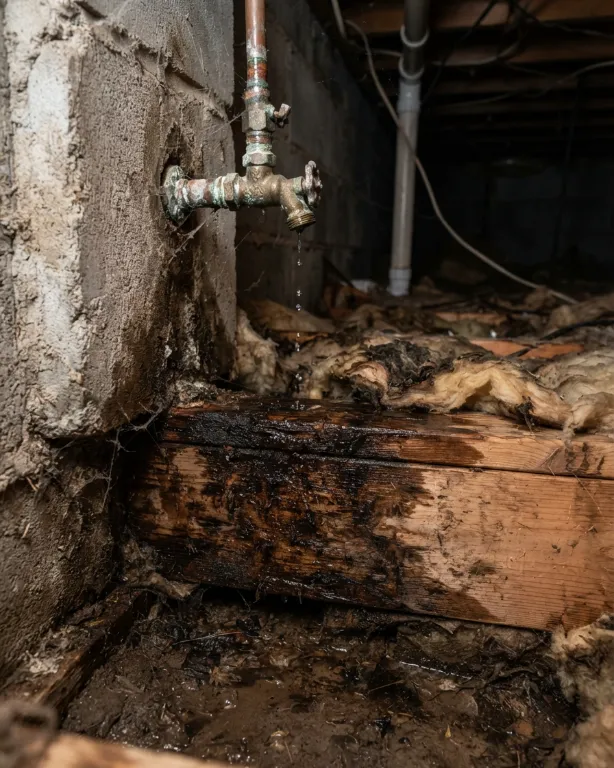
Open each outdoor tap once, with a torch and someone checking the wall, crawl space or basement inside. Two minutes in March catches a crack before it soaks a rim joist for a month.
Symptoms
Five patterns, and each one points at a different part of the tap.
| Symptom | Cause | Fix |
|---|---|---|
| Drips from the spout when closed | Worn seat washer | Washer or stem. Cheap |
| Weeps around the handle | Loose or hardened packing nut | Tighten or repack. Cheap |
| Drips continuously from the small side fitting | Failed vacuum breaker | Replace the breaker |
| No water at all from the tap | Frozen line, closed interior shutoff, or split barrel | Investigate before forcing it |
| Water appears inside when the tap is opened | Split body or barrel from a freeze | Replace the tap |
| Water appears inside when the tap is closed | Split in the supply pipe behind the wall | Urgent. burst pipe repair |
| Very low flow at the tap only | Blocked vacuum breaker or a partly closed shutoff | Clean or open |
| Handle turns but nothing happens | Broken stem inside the barrel | Replace the tap |
The two lines to take seriously are the ones where water appears indoors. If it only appears when the tap is open, the tap itself has cracked and the repair is contained. If water appears with the tap closed, the split is in the pressurised supply pipe behind it and it will not stop. Close the interior shutoff or the main and treat it as an emergency.
Everything above the line in that table is a genuinely small job. A seat washer, a packing nut and a vacuum breaker between them account for most outdoor tap complaints, and none of them require opening anything.
Prevention
The state spans a wide freeze range, and outdoor taps are the most reliably damaged thing in it.
This one habit prevents the majority of outdoor tap failures. Do it in November, before the first hard night, and store hoses drained. A hose full of ice also splits.
Close the interior valve serving the tap, then open the tap and leave it open through the winter. The section between them drains and there is nothing left to freeze.
Sprinkler systems and their backflow devices are far more vulnerable than a hose bib, and a cracked backflow preventer is a much dearer repair. Have it blown out before the first freeze.
The pipe feeding an outdoor tap often crosses an unheated crawl space or garage. That run, not the tap, is where many splits actually occur. See pipe insulation and freeze protection.
A moulded cover over a tap slows heat loss and is worth the few dollars, but it will not save a body full of water on a 12-degree night with a hose attached. It supplements the habit; it does not replace it.
If a tap has already frozen once, it will freeze again. Replacing it with a correctly pitched frost-free sillcock costs a few hundred dollars and removes the annual worry.
A note on Virginia specifically: the Shenandoah Valley, the Piedmont and the southwest see reliably hard freezes, while Hampton Roads and the southeast get fewer but sharper cold snaps, which is arguably worse, because houses there are less prepared and hoses stay attached year-round. Some of the busiest outdoor tap weeks we see follow a single unexpected cold night in a mild region.
If a tap or its supply line has already frozen and no water is coming out, do not force the handle. Thaw the line gently and slowly, and read frozen pipe repair first. A cracked pipe under ice discharges the moment the ice releases, and you want to be there with the shutoff located when it does.
Replacement
An hour or two, and the details are all about drainage and access.
Two upgrades worth asking about while the pipe is open. An interior shutoff for each outdoor tap turns winterisation into a thirty-second job and gives you a way to stop a leak without shutting the whole house. And if you have wanted a tap on a different wall, by the garden, by the drive, the labour to add one while the plumber is already there is far less than a separate visit.
Replacing an outdoor tap before winter costs a fraction of repairing what a frozen one does to a wall.
Cost
The cheapest category of plumbing work, and the one with the best ratio of prevention to damage.
| Work | Typical range |
|---|---|
| Seat washer or stem repair | $110. $220 |
| Repack a weeping handle | $110. $200 |
| Vacuum breaker replacement | $95. $180 |
| Standard hose bib replacement | $180. $380 |
| Frost-free sillcock replacement | $250. $550 |
| Frost-free with new interior shutoff | $350. $750 |
| New outdoor tap on a new wall location | $450. $1,200 |
| Repair a split supply line behind the wall | $450. $1,500 |
| Irrigation blow-out, seasonal | $85. $200 |
| Yard hydrant installation | $700. $2,000 |
Compare the bottom of that list with the alternative. A split supply line discovered in spring, having discharged into a crawl space or a stud bay for weeks, brings drywall, insulation, framing and remediation with it. Routinely several thousand dollars. The frost-free replacement is the cheapest insurance on the list.
Nine out of ten frozen outdoor taps had a hose attached. Ninety seconds in November prevents nearly all of it.
A frost-free sillcock fitted level or sloping inward cannot drain and freezes like any other tap. Ask for the pitch to be set with a level.
A frost crack discharges into the wall, not out of the spout. Two minutes of checking in March catches it on day one instead of week four.
Questions
Because it was full of water the whole time. A standard hose bib holds water in its body when closed, and if a hose was left attached, neither the body nor the hose could drain. The ice expanded and cracked the brass, but nothing leaked because the valve was shut. The failure only reveals itself when you open the tap in spring, and then it discharges inside the wall.
It places the actual valve seat eight to twelve inches inside the heated wall, so the water it shuts off sits inboard of the freeze line. Each time you close it, the water in the exposed barrel drains out by gravity. Two conditions make that work: the barrel must be pitched slightly downward to the outside, and no hose can be attached to hold the water in. Fitted level, a frost-free tap freezes like any other.
They help a little and they are cheap enough to be worth using, but they are not a substitute for disconnecting the hose. A cover slows heat loss from the tap; it cannot save a body full of trapped water on a hard freeze night. Think of it as supplementing the habit rather than replacing it.
No. It is one of the cheapest repairs in plumbing. A dripping spout on a closed tap is a worn seat washer or stem, usually $110 to $220 fitted. Water weeping around the handle instead is a loose or hardened packing nut, in the same range. Neither requires opening a wall, and both are worth doing before winter.
A vacuum breaker. It prevents contaminated water, a hose lying in a puddle, or one attached to a chemical sprayer, from being siphoned back into your drinking water if supply pressure drops. It is required on new installations, and it will sometimes drip as it ages. That is a cheap replacement, not a reason to remove it.
Do not force the handle, and do not leave it open and walk away. The line is probably frozen, and there may already be a crack that will discharge the moment the ice releases. Locate your interior shutoff first, thaw the line gently and slowly with warm air rather than a flame, and be present when flow returns. Read our frozen pipe repair guidance before starting.
Close the tap and the interior shutoff, or the main if there is no local shutoff. That is a frost-split tap body or barrel discharging into the structure. It is a contained repair, a replacement tap, ideally a frost-free one, but the wet insulation and framing need to dry, so look at what the water reached while you are down there.
Late October to mid-November across most of the state, and before any forecast night in the twenties. Disconnect and drain every hose, close any interior shutoff serving an outdoor tap and leave the tap open, and have irrigation systems blown out. In the milder southeast the temptation is to skip it, and that is exactly where a single unexpected cold night causes the most damage.
Usually yes, and it is much cheaper done alongside other work than as a standalone visit. The practical constraints are what is behind the wall to tap into, whether the run crosses unheated space, and whether an interior shutoff can be placed somewhere accessible. Ask while a plumber is already there for something else.
Yes. A tap that has frozen has been weakened even if it is not leaking, and the conditions that froze it have not changed. Replacing it with a correctly pitched frost-free sillcock, ideally with a new interior shutoff, costs a few hundred dollars and removes an annual risk that costs thousands when it goes badly.
Related work
Outdoor taps are the visible end of a winter problem that runs through the whole house.
The exposed runs feeding outdoor taps are where many splits actually happen.
Read moreWhat to do when nothing comes out, and how to thaw a line without causing a flood.
Read moreWhen water appears indoors with the tap closed, the split is in the supply pipe.
Read moreNinety seconds in November
It is the single most effective piece of plumbing maintenance a Virginia homeowner can do, and it costs nothing. If a tap has already frozen once, let us replace it with a frost-free before the next freeze.
(866) 683-0244Statewide, 24 hours. Independent licensed professionals.